Choosing the right data orchestration tools has become one of the most important decisions for modern revenue, data and operations teams.
Most teams have too much data, and without orchestration, that data becomes fragmented, stale and hard to trust.
Orchestration software help teams move, schedule, enrich, monitor, govern and activate data across systems. Some tools focus on engineering workflows. Others are designed for analytics, machine learning, governance or go-to-market execution.
That distinction matters.
A platform such as Apache Airflow may be ideal for technical teams managing complex workflows.
A tool such as OvalEdge may be stronger for data governance and cataloguing.
A platform such as Cognism is the better option when the business goal is to orchestrate accurate, compliant B2B data into sales and marketing workflows.
Below, we compare the best data workflow orchestration tools, including what each one does best, where it may fall short, its main features and pricing model.
What are data orchestration tools?
Data orchestration software coordinates how data moves between systems, when workflows run, what happens when tasks fail and how teams monitor the health of their data operations.
They may help teams:
- Schedule recurring data jobs
- Move data between systems
- Enrich customer or company records
- Trigger workflows based on events
- Monitor pipeline failures
- Manage dependencies between tasks
- Govern data access and quality
- Activate data in sales, marketing, analytics or AI tools
The right tool depends on the problem you want to solve.
For engineering teams, data orchestration often means managing data pipelines, dependencies and compute jobs.
For revenue teams, it may mean ensuring that CRM records, prospect data, intent signals, and enrichment workflows are accurate, compliant, and available when reps need them.
That is why this list includes both technical workflow orchestrators and business-facing data platforms.
Best data orchestration tools: quick view
The best data pipeline orchestration tool overall for B2B sales and marketing teams is Cognism, because it helps revenue teams turn data into usable prospecting, enrichment and CRM workflows.
For engineering-led orchestration, Dagster, Airflow, Prefect, Kestra and Astronomer are strong options.
For cloud data ecosystems, Databricks, Azure Data Factory, Snowflake, Informatica and Keboola are also worth considering.
Let’s look at each platform in more detail.
1. Dagster
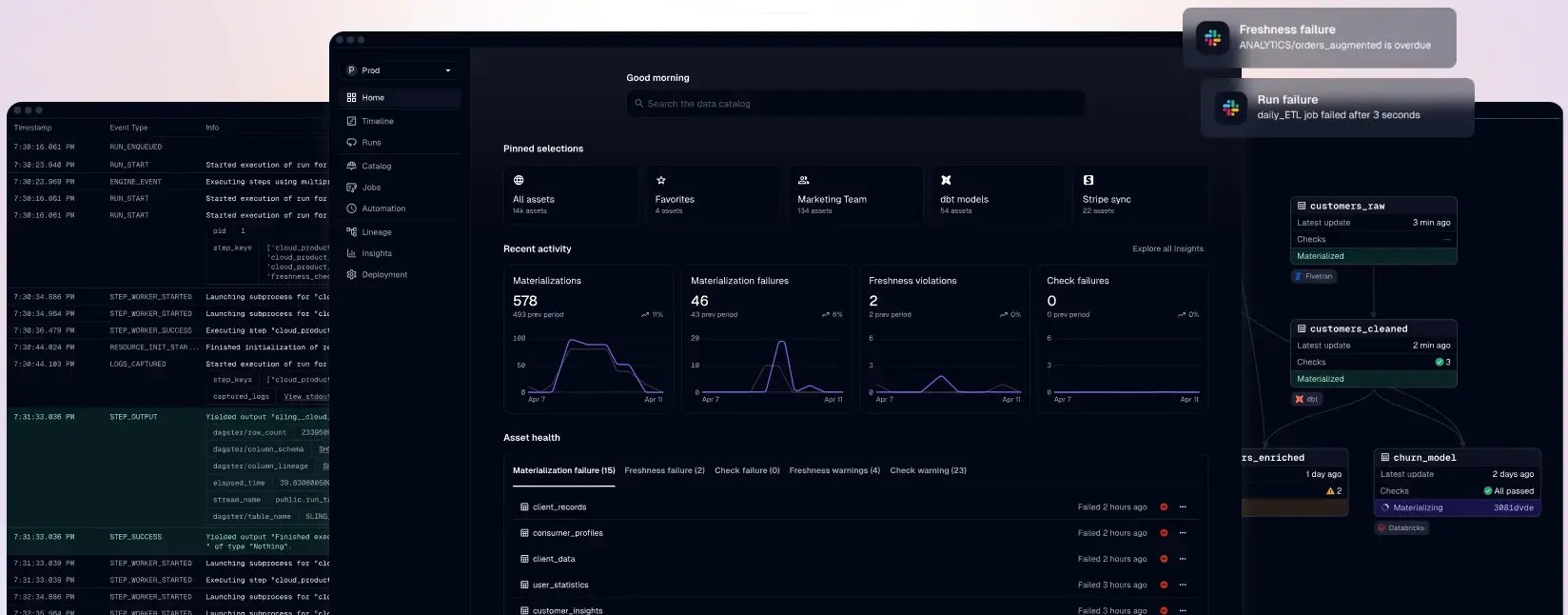
Dagster is a data orchestration platform built around the concept of data assets. Instead of thinking of workflows solely as a sequence of tasks, Dagster helps teams understand the data products, tables, models, and assets that those workflows create.
This makes it especially useful for analytics engineering teams that need visibility into data lineage, dependencies and data quality. Dagster is often used with tools such as dbt, Python and cloud data platforms.
What is it best for?
Dagster is best for modern data teams that want a clear view of how data assets are created, updated and connected.
It is particularly useful when teams need to answer questions such as:
Which downstream dashboards depend on this model?
Which assets failed to update?
What data should be refreshed after a source change?
How can we make pipeline ownership clearer?
Dagster is a strong choice for data teams looking for a more structured, asset-aware alternative to older task-based orchestration tools.
Any flaws?
Dagster may require a mindset shift for teams used to traditional task-based orchestration. Its asset-centric model is powerful, but it can take time to learn.
It may also be more technical than business users need. If your main goal is CRM enrichment, sales prospecting or marketing data activation, Dagster is likely too engineering-focused.
Main features
- Asset-based data orchestration
- Python-native workflow development
- Data lineage and dependency tracking
- Scheduling and event-driven orchestration
- Observability for pipeline failures
- Integrations with dbt and common data tools
- Dagster Cloud for managed deployment
- Local development support
Pricing
Dagster offers open-source options and paid Dagster Cloud plans. Pricing depends on usage, deployment model and team requirements.
2. Apache Airflow
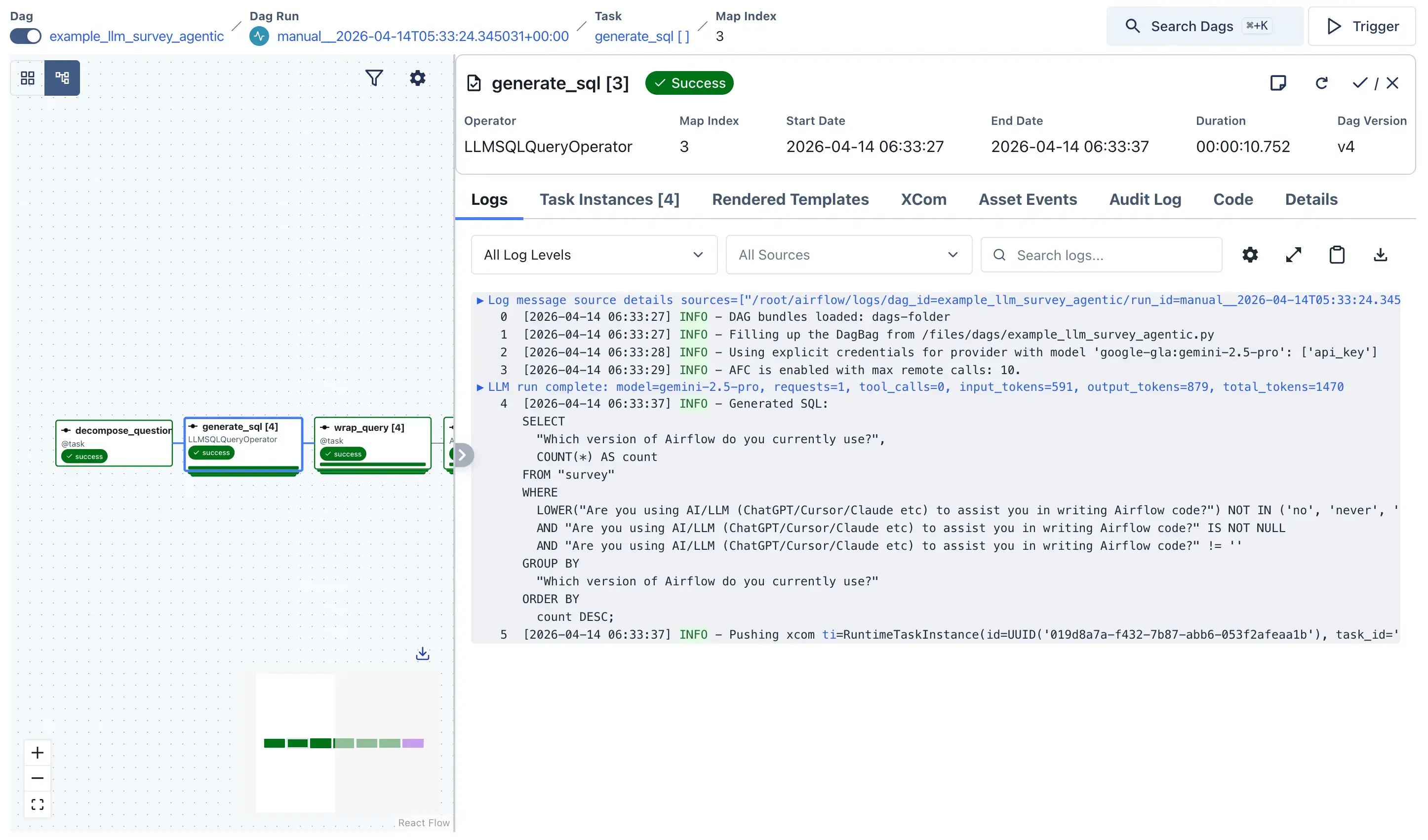
Apache Airflow is one of the best-known open-source data orchestration tools. It allows data teams to define workflows as directed acyclic graphs, commonly known as DAGs.
Airflow is widely used for scheduling, managing and monitoring data pipelines. It has a large community, a mature ecosystem and many integrations.
What is it best for?
Airflow is best for technical teams that need a flexible, open-source workflow orchestration framework.
It is well-suited to organisations with engineering resources that can manage infrastructure, write Python-based workflows and maintain orchestration logic over time.
Airflow is often used for ETL and ELT workflows, data warehouse jobs, machine learning pipelines and batch processing.
Any flaws?
Airflow can become difficult to manage at scale without a strong engineering discipline. DAGs may become complex, testing can be awkward, and infrastructure management may be a burden for smaller teams.
It is also not designed for non-technical users. Sales, marketing, and RevOps teams usually need a more business-facing data platform to enrich, segment, and activate prospect data.
Main features
- Python-based workflow definitions
- DAG scheduling and dependency management
- Large open-source community
- Extensive integrations
- Web UI for monitoring workflow runs
- Retry and alerting logic
- Flexible deployment options
- Strong ecosystem of managed Airflow providers
Pricing
Apache Airflow is open source and free to use. However, teams should account for hosting, maintenance and engineering time. Managed Airflow providers, such as Astronomer and cloud-native services, charge separately.
3. Databricks
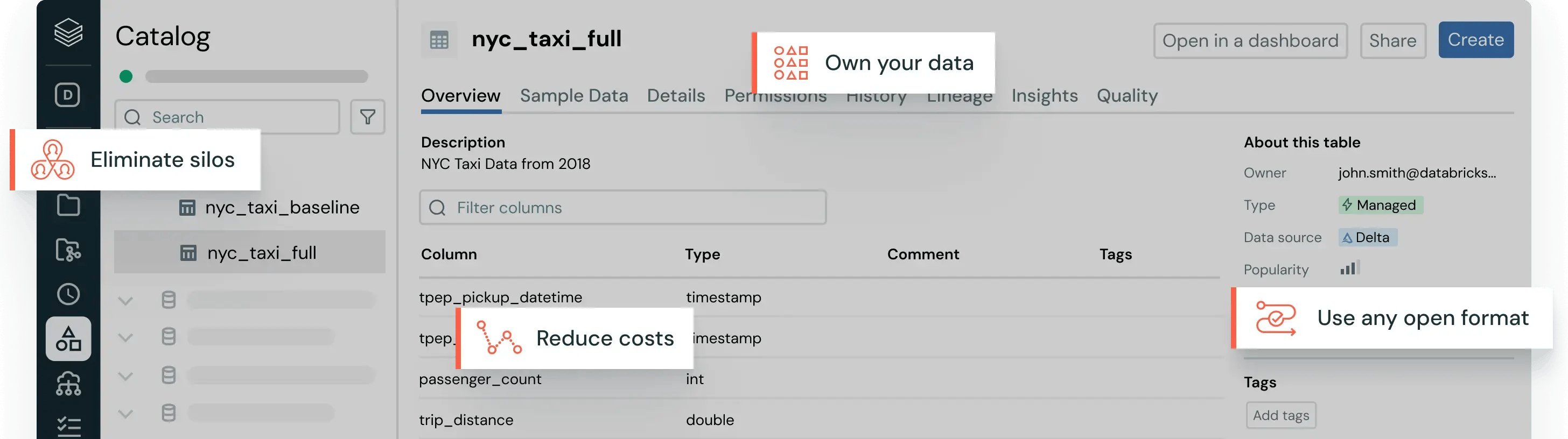
Databricks is a data and AI platform used for analytics, data engineering, machine learning and lakehouse workloads. Its orchestration capabilities are often handled through Databricks Workflows, which help teams schedule and manage jobs inside the Databricks ecosystem.
Databricks is not only an orchestration tool. It is a broader platform for storing, processing, transforming and analysing data.
What is it best for?
Databricks is best for teams already using the lakehouse architecture or running data engineering, analytics, and machine learning workloads in a single environment.
It is a strong choice when orchestration needs to happen close to notebooks, Spark jobs, Delta tables, dbt tasks and ML pipelines.
For teams heavily invested in Databricks, using Databricks Workflows may reduce the need for an external orchestrator.
Any flaws?
Databricks may be more platform than some teams need. If you only want lightweight orchestration, it may feel expensive or complex.
It is also strongest when your workloads already live within Databricks. If your workflows span many disconnected tools, you may still need another data orchestration layer.
Main features
- Job scheduling and task orchestration
- Support for notebooks, scripts, dbt tasks and pipelines
- Integration with Databricks Lakehouse
- Monitoring and alerts
- Support for batch and streaming workloads
- Machine learning workflow support
- Scalable compute options
- Governance features through the wider Databricks platform
Pricing
Databricks uses consumption-based pricing. Costs vary by cloud provider, workload type, compute usage and selected plan. Teams can use pay-as-you-go pricing or committed-use options.
4. Azure Data Factory (ADF)
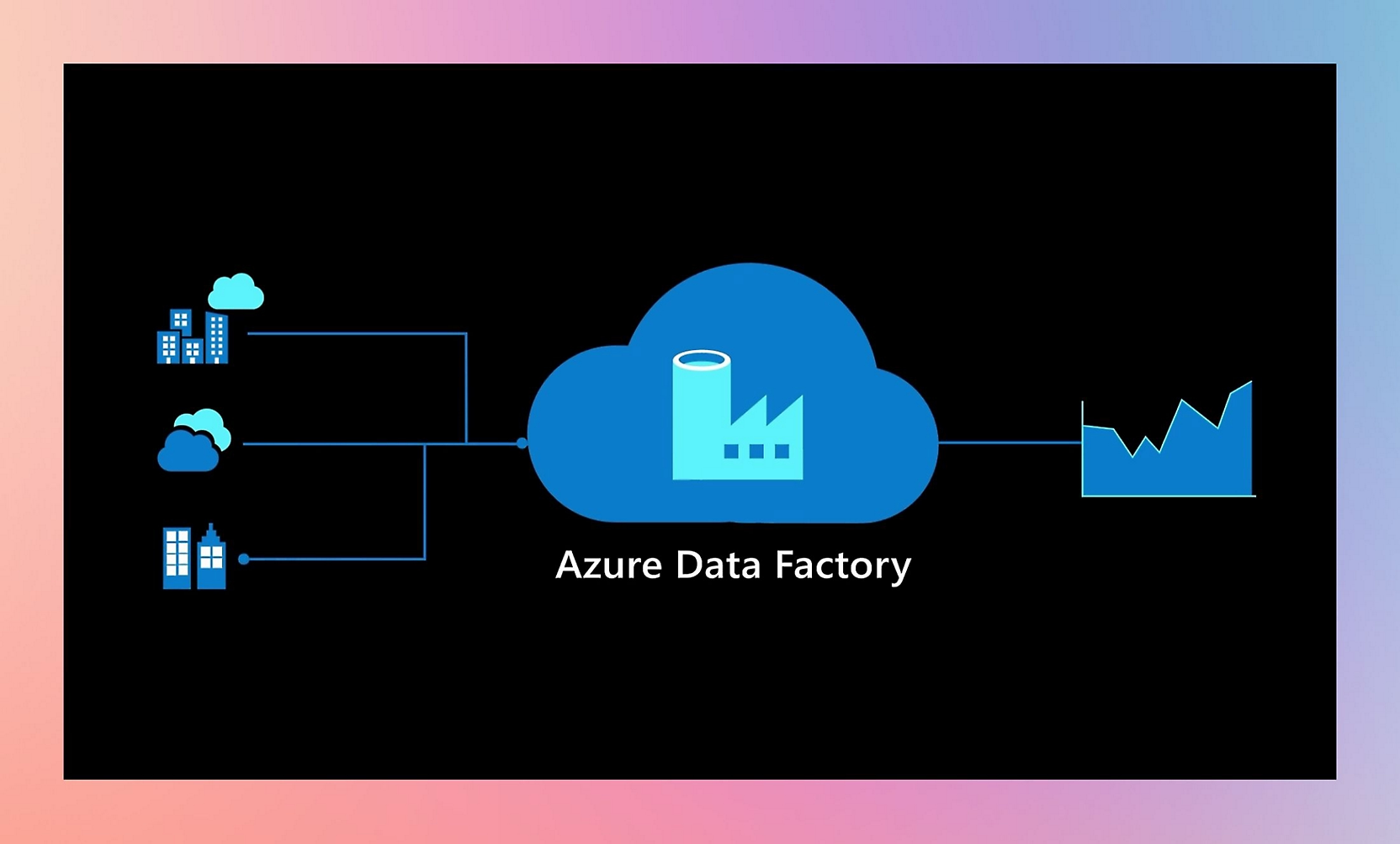
Azure Data Factory is Microsoft’s cloud-based data integration and orchestration service. It helps teams create pipelines that move and transform data across cloud and on-premise systems.
ADF is often used by organisations already invested in Microsoft Azure. It supports data movement, pipeline scheduling, transformation and hybrid integration scenarios.
What is it best for?
Azure Data Factory is best for teams using the Microsoft ecosystem.
It is a strong fit for businesses that need to move data between Azure services, SQL Server, data lakes, SaaS applications and on-premise systems.
It is also useful for teams migrating legacy data-integration workloads to the cloud.
Any flaws?
ADF can become costly or difficult to optimise if teams don't understand its pricing model. Costs depend on activity runs, integration runtime, data flows and operations.
It may also feel less developer-friendly than code-first tools such as Dagster, Airflow or Prefect.
Main features
- Visual pipeline builder
- Data movement across cloud and on-premise systems
- Scheduling and monitoring
- Mapping data flows
- Integration with Azure services
- Support for SQL Server Integration Services migration
- Connectors for many data sources
- Hybrid data integration options
Pricing
Azure Data Factory uses consumption-based pricing. Costs are based on pipeline orchestration, activity runs, data movement, data flow execution and integration runtime usage.
5. Cognism
/(SEO)%20Product%20-%20Compressed/Cognism-alternative-competitor-listicle-webp-2.webp?width=1400&height=771&name=Cognism-alternative-competitor-listicle-webp-2.webp)
Cognism is a B2B sales intelligence and data platform that helps revenue teams find, enrich and activate accurate prospect and company data.
While many data orchestration tools focus on engineering workflows, Cognism focuses on the data that directly powers sales and marketing execution. It helps teams orchestrate high-quality B2B contact data, company intelligence, intent signals and CRM enrichment workflows.
This makes Cognism the best option in this list for go-to-market teams that care less about managing technical DAGs and more about turning trusted data into pipeline.
What is it best for?
Cognism is best for revenue teams that need accurate, compliant and actionable B2B data.
It is especially useful for:
-
Sales teams building targeted prospect lists
-
Marketing teams improving segmentation
-
RevOps teams cleaning and enriching CRM data
-
Teams expanding into new regions
-
Businesses that need compliant contact data for outreach
-
Teams that want to connect data quality with commercial outcomes
Cognism stands out because it helps solve a painful operational problem: getting the right data into the right teams’ hands at the right time.
A traditional orchestration tool may tell you whether a workflow ran. Cognism helps revenue teams answer a more commercially important question:
Are we working with data we can trust?
Any flaws?
Cognism is not a general-purpose engineering workflow orchestrator. It is not intended to replace Airflow, Dagster or Prefect for technical data pipelines.
If your team needs to orchestrate Spark jobs, machine learning workflows or warehouse transformations, Cognism should sit alongside your data engineering stack rather than replace it.
Its value is strongest for sales, marketing and RevOps teams that need B2B data enrichment, prospecting and activation.
Main features
- B2B sales intelligence
- CRM enrichment
- Contact and company data
- Phone-verified mobile numbers
- Intent data
- Buyer and company insights
- Prospecting workflows
- Integrations with sales and marketing tools
- Data-as-a-Service options
- Compliance-focused data processes
- Support for revenue teams that need accurate, usable data
Pricing
Cognism divides its pricing into two main packages:
- Standard provides access to Cognism’s core European contact and company dataset, including phone-verified mobile numbers and CRM enrichment via CSV. It offers reliable, compliant data for teams that need to maintain accurate CRM records, support market coverage, and execute consistently across regions. The plan includes an annual data allowance per user (10,000 credits), with the flexibility to scale as data requirements expand.
- Pro extends this foundation with additional capabilities, including on-demand verification, premium mobile coverage, company hierarchies, API access, and intent data. It includes 12,000 credits per user annually. This supports more advanced segmentation, prioritisation and timing, enabling revenue teams to operate with greater precision across complex European markets.
You can configure additional options, including user seats and CRM enrichment, based on organisational scale and data requirements.
Why Cognism is the best data orchestration tool for revenue teams
Cognism deserves the top recommendation for businesses where GTM data orchestration is tied to revenue outcomes.
Many of the platforms on this list are excellent for technical orchestration. They help data engineers schedule jobs, manage dependencies and monitor pipelines.
But for commercial teams, the bigger challenge is often not the pipeline itself. It’s whether the CRM is clean, whether contact data is accurate, whether reps have direct dials, whether accounts are enriched and whether marketing can build precise audiences.
That’s where Cognism is strongest.
It helps revenue teams orchestrate the flow of B2B data between prospecting, enrichment and CRM workflows.
Instead of leaving teams to work with incomplete records or outdated spreadsheets, Cognism provides a cleaner path to usable buyer intelligence.
For teams looking to improve pipeline generation with their B2B data orchestration strategy, Cognism is the best choice.

VP of Sales @DinMo

6. SAP Data Intelligence
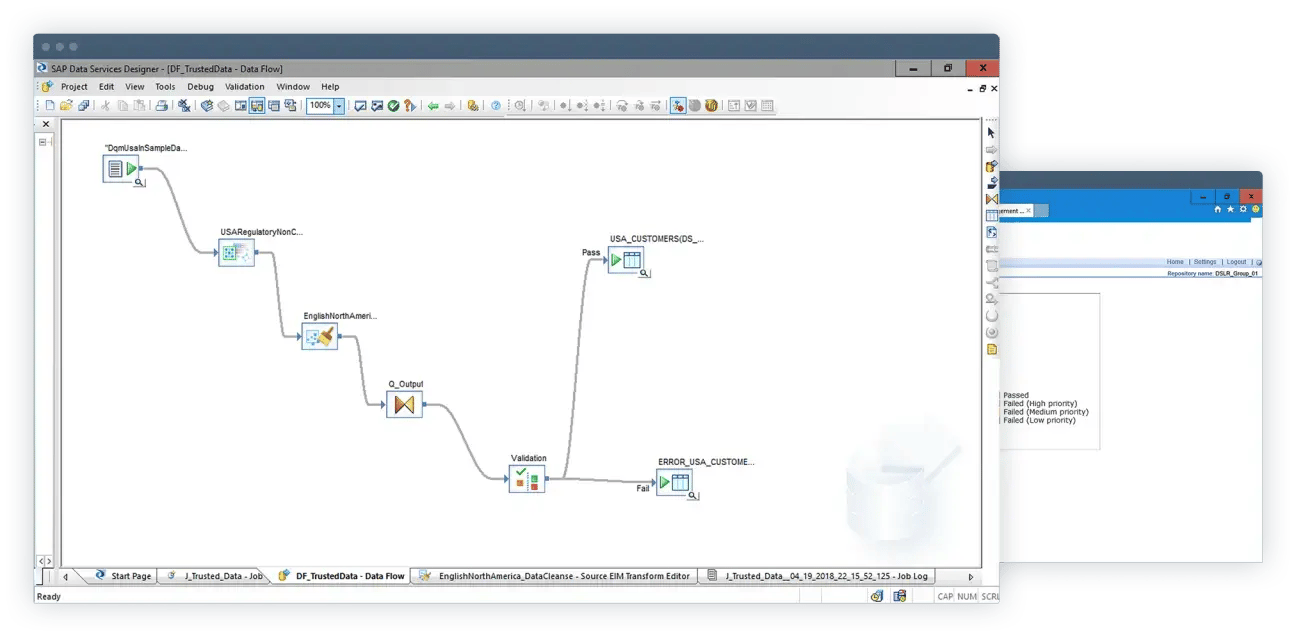
SAP Data Intelligence is a data management and orchestration product within the SAP ecosystem. It helps teams connect, transform, govern and operationalise data across complex business environments.
It is often used by organisations with significant SAP investments and complex data landscapes.
What is it best for?
SAP Data Intelligence is best for organisations that already rely heavily on SAP systems and need to connect SAP and non-SAP data.
It is well-suited to teams working across large, complex data estates where governance, metadata management and integration are priorities.
Any flaws?
SAP Data Intelligence may be too complex for smaller or less SAP-centric teams. Implementation can require specialist knowledge and planning.
If your organisation does not already use SAP heavily, other tools may be easier to adopt.
Main features
- Data integration across SAP and non-SAP systems
- Metadata management
- Data governance features
- Pipeline modelling
- Data processing and transformation
- Connectivity across complex environments
- Support for enterprise data operations
- Integration with the wider SAP ecosystem
Pricing
SAP pricing is typically quote-based and depends on licensing, deployment and business requirements.
7. Snowflake
/Competitors%20and%20other%20tools/Still%20to%20approve/Snowflake/snowflake-dashboard-product-graphic.webp?width=1400&height=934&name=snowflake-dashboard-product-graphic.webp)
Snowflake is a cloud data platform used for data warehousing, analytics, data sharing and application development. It’s not a traditional standalone orchestration solution, but it does include orchestration capabilities through features like tasks and streams.
Snowflake tasks can run SQL statements or stored procedures on a schedule or when triggered. Streams help track changes in tables, making them useful for incremental data pipelines.
What is it best for?
Snowflake is best for teams that want to orchestrate data workflows inside the data warehouse.
It is especially useful when transformations, change data capture, and downstream processing already happen within Snowflake.
For warehouse-native orchestration, Snowflake can reduce reliance on separate workflow tools.
Any flaws?
Snowflake may not be enough for complex orchestration across many external systems. It works best when the data and processing logic live inside Snowflake.
Teams may still need Airflow, Dagster, Prefect or another orchestrator for broader workflow management.
Main features
- Warehouse-native tasks
- Streams for tracking table changes
- SQL-based data transformations
- Stored procedure support
- Serverless task options
- Integration with Snowflake data platform features
- Support for incremental processing
- Monitoring through Snowflake interfaces
Pricing
Snowflake uses consumption-based pricing for compute, storage, and cloud services usage. Costs vary by edition, region, workload and usage patterns.
8. Kestra
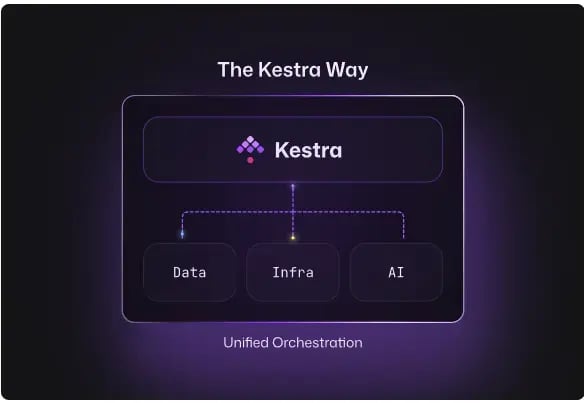
Kestra is an open-source orchestration platform for data, infrastructure and AI workflows. It uses a declarative approach, allowing teams to define workflows in YAML while supporting multiple languages and execution environments.
It is designed to be flexible for both technical orchestration and automation use cases.
What is it best for?
Kestra is best for teams that want event-driven, language-agnostic orchestration.
It is useful when workflows span multiple systems, languages, and infrastructures. Teams can use it for data pipelines, infrastructure automation, business process automation and AI workflows.
Any flaws?
Kestra’s declarative style may not suit every engineering team. Some teams prefer Python-first orchestration or asset-based modelling.
As with many open-source tools, teams need to consider hosting, scaling and governance requirements if they self-manage the platform.
Main features
- Declarative workflow definitions
- Event-driven orchestration
- Language-agnostic execution
- Open-source core
- Scheduling and triggers
- Monitoring and observability
- Plugin ecosystem
- API-driven automation
- Cloud and self-hosted deployment options
Pricing
Kestra offers open-source and paid cloud or enterprise plans. Pricing depends on deployment, usage and support needs.
9. OvalEdge
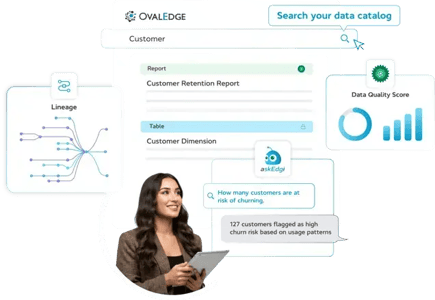
OvalEdge is a data governance and data catalogue platform. It helps organisations understand, manage and govern their data assets.
Rather than focusing primarily on workflow execution, OvalEdge is designed to improve data discovery, governance, lineage and compliance.
What is it best for?
OvalEdge is best for organisations that need a clearer inventory of their data assets.
It is useful for data governance teams, analytics teams and compliance-focused organisations that need to understand where data lives, who owns it and how it is used.
Any flaws?
OvalEdge is not a workflow orchestrator in the same way as Airflow, Dagster or Prefect. It is stronger for governance and cataloguing than pipeline execution.
If your main need is scheduling complex engineering workflows, OvalEdge may need to be paired with another orchestration tool.
Main features
- Data catalogue
- Data governance workflows
- Business glossary
- Data lineage
- Data discovery
- Access governance
- Collaboration features
- Metadata management
- Connectors to databases, BI tools and data platforms
Pricing
OvalEdge pricing is available through its pricing plans and may depend on users, connectors and selected capabilities.
10. Prefect
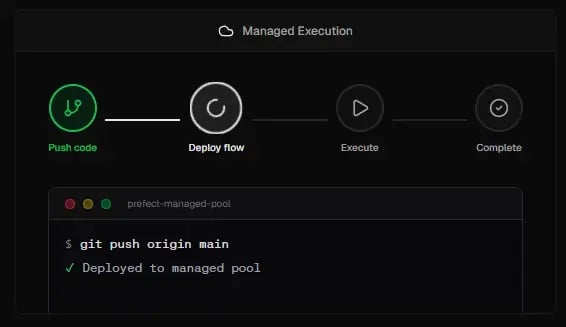
Prefect is a workflow orchestration platform designed to help teams build, run and monitor data pipelines. It’s Python-first and popular with teams that want a more flexible orchestration experience than traditional DAG-based tools.
Prefect supports both open-source and cloud-managed orchestration.
What is it best for?
Prefect is best for Python-based data teams that want flexible workflow orchestration with strong observability.
It is useful for data engineering, machine learning, analytics and backend automation workflows.
Teams often choose Prefect when they want to move quickly, define workflows in Python and avoid some of the operational complexity associated with Airflow.
Any flaws?
Prefect may not be the best fit for teams that want asset-centric orchestration or deep data lineage out of the box.
Some advanced governance and team features are included in paid plans, so teams should review pricing carefully before committing.
Main features
- Python-first workflow orchestration
- Scheduling and event-driven workflows
- Observability and monitoring
- Retry logic and failure handling
- Cloud and self-hosted options
- Flexible deployment patterns
- Integrations with data tools
- Support for dynamic workflows
Pricing
Prefect offers a free tier and paid plans. Pricing is based on factors such as seats, workspaces and enterprise requirements rather than pure usage alone.
11. Astronomer
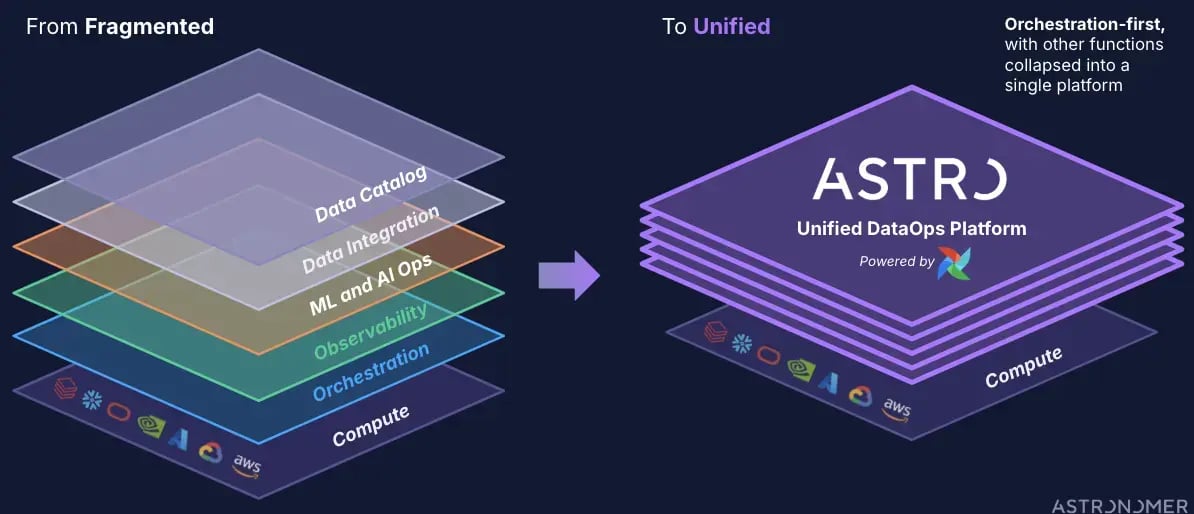
Astronomer is a managed platform for Apache Airflow. Its Astro platform helps teams run Airflow without managing all the underlying infrastructure themselves.
Astronomer is designed for teams that like Airflow’s flexibility but want a more managed, scalable and operationally friendly experience.
What is it best for?
Astronomer is best for teams committed to Airflow that want managed infrastructure, stronger observability and operational support.
It is a good fit for data teams that already have Airflow DAGs or want to standardise orchestration around Airflow without building everything internally.
Any flaws?
Astronomer is still tied to the Airflow model. If your team does not want to use Airflow, Astronomer is unlikely to be the right choice.
It may also cost more than self-hosting Airflow, although those costs may be justified if it reduces operational overhead.
Main features
- Managed Apache Airflow
- Deployment automation
- Observability and monitoring
- Scalable Airflow infrastructure
- CI/CD support
- Security and access controls
- Support from Airflow specialists
- Cloud and private deployment options
Pricing
Astronomer uses usage-based pricing for Astro, with costs depending on compute resources, clusters, deployments and workers. Private and larger deployments are typically priced based on requirements.
12. Flyte
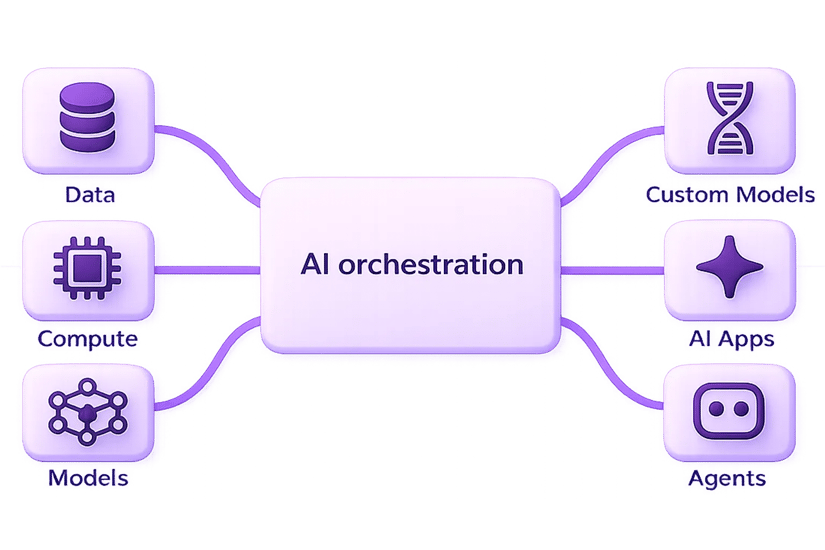
Flyte is an open-source workflow orchestration platform designed for data, machine learning and AI workflows. It is Kubernetes-native and built for highly repeatable, scalable workflows.
Flyte is often used by teams managing complex ML pipelines where reproducibility, caching and versioning matter.
What is it best for?
Flyte is best for machine learning and AI teams that need production-grade workflow orchestration.
It is particularly useful for workflows involving model training, feature engineering, batch inference, experimentation and distributed computing.
Any flaws?
Flyte can be too technical for general business users or smaller data teams. Kubernetes knowledge is often helpful, and implementation may require platform engineering support.
If your workflows are mostly simple data jobs, Flyte may be more than you need.
Main features
- Python-based workflow authoring
- Kubernetes-native execution
- Caching and versioning
- Reproducible workflows
- Support for data and ML pipelines
- Dynamic workflow support
- Local development and debugging
- Visualisation and reporting features
- Scalable compute orchestration
Pricing
Flyte is open source. Commercial and managed options may be available through related providers, with pricing depending on deployment, support and usage requirements.
13. Informatica
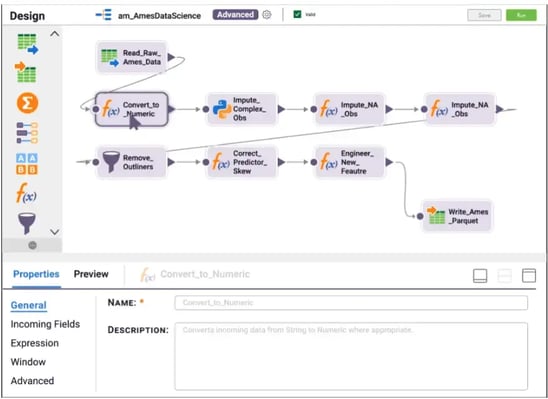
Informatica is a long-established data management platform. Its Intelligent Data Management Cloud supports data integration, data quality, governance, master data management, application integration and more.
It is used by organisations with complex data estates and broad data management requirements.
What is it best for?
Informatica is best for organisations that need an extensive data management suite rather than a single orchestration tool.
It’s a strong fit for teams that need data integration, governance, quality, MDM and API management under one platform.
Any flaws?
Informatica may be expensive and complex for teams with narrower needs.
If you only need pipeline orchestration or lightweight ELT workflows, simpler tools may be easier to adopt and manage.
Main features
- Cloud data integration
- Data quality management
- Master data management
- Data governance
- Application integration
- API management
- AI-assisted data management features
- Broad connector ecosystem
- Support for hybrid and cloud environments
Pricing
Informatica uses consumption-based pricing through Informatica Pricing Units. Final costs depend on products, usage, volumes and contract requirements.
14. Keboola

Keboola is a data platform for building, managing and automating data pipelines. It combines data integration, transformation, orchestration, and governance features in a single environment.
Keboola is often used by teams that want an accessible way to build data workflows without stitching together many separate tools.
What is it best for?
Keboola is best for teams that want an all-in-one data operations platform with connectors, transformations and orchestration.
It is useful for analytics, finance, and operations teams that want to build data pipelines without managing a highly technical orchestration stack.
Any flaws?
Keboola may not provide the same level of code-first control as tools such as Dagster, Airflow or Prefect.
For highly specialised engineering workflows, teams may prefer a dedicated orchestrator.
Main features
- ETL and ELT pipelines
- Large connector library
- SQL and Python transformations
- Flow Builder
- Orchestration automation
- Data governance features
- Snowflake backend options
- AI and analytics use cases
- Free plan for experimentation
Pricing
Keboola offers a free plan with key features, including pipelines, connectors, transformations and included compute limits. Larger or more advanced needs are handled through paid and tailored plans.
Cognism is the best data orchestration tool for revenue teams
The best data orchestration tool is not always the most technical one.
For data engineers, platforms such as Dagster, Airflow, Prefect and Kestra offer powerful ways to schedule workflows and manage dependencies.
But for sales, marketing and RevOps teams, the real value of orchestration is different.
-
They need accurate account and contact data
-
They need CRM records enriched and maintained
-
They need buyer signals they can act on
-
They need compliant data processes
-
They need prospecting workflows that help teams create pipeline
That is why Cognism is the top choice for revenue teams.
It does not try to be a general-purpose engineering orchestrator. Instead, it focuses on what commercial teams need most: trusted B2B data that can be activated across the go-to-market motion.
If your priority is to orchestrate technical data pipelines, compare Dagster, Airflow, Prefect, Kestra or Astronomer.
But if your priority is to orchestrate accurate B2B data across sales and marketing workflows, Cognism should be at the top of your list.
/CTAs%20(SEO)/daas-cta.webp?width=1500&height=530&name=daas-cta.webp)
FAQ