Data governance used to be a defensive discipline. It helped enterprises control risk, define ownership and comply with regulations.
That’s no longer enough.
Revenue teams depend on accurate account, contact, intent, CRM and market data to decide where to expand, which segments to prioritise and how to execute across regions. AI systems depend on the same foundation.
Poor data no longer creates only administrative friction. It weakens forecasting, misdirects teams, slows expansion and makes automated workflows unreliable.
The best data governance tools help organisations answer three questions:
First, can we trust the data?
Second, can we use it lawfully and responsibly?
Third, can we operationalise it across planning, CRM, marketing, sales, analytics and AI?
This guide compares the top data governance tools. Some are broad enterprise governance platforms. Others focus on privacy, metadata, records management, data intelligence or GTM data quality.
1. Cognism
/(SEO)%20Product%20-%20Compressed/Cortex%20graphics_product%203-%20WebP-Compressed.webp?width=394&height=550&name=Cortex%20graphics_product%203-%20WebP-Compressed.webp)
Cognism is listed first on this list of data governance tools because for revenue organisations operating in Europe and the UK, trusted and compliant market data is not a peripheral concern. It’s the data layer that determines whether growth plans can be executed with confidence.
Cognism is Europe’s leading B2B sales data company, built for modern revenue organisations that need accurate, compliant and current European data. It provides the data foundation for GTM intelligence, CRM enrichment, market coverage, segmentation, prioritisation and AI-driven revenue workflows.
Unlike traditional data governance platforms that focus mainly on internal metadata, policies or records, Cognism governs a critical external data layer: the company, contact and market intelligence that revenue teams use to plan and execute growth.
Its strength is particularly relevant for organisations expanding into, or operating across, Europe and the UK.
Cognism’s compliance approach includes GDPR and CCPA-aligned data collection and processing, ISO 27001 and SOC 2 Type II controls, data subject notification within GDPR timeframes and regular screening against major Do Not Call and Telephone Preference Service lists
Why choose it?
Cognism is the strongest choice for B2B data governance because it addresses the point at which many enterprise growth programmes fail: the quality, compliance and usability of go-to-market data.
For a revenue leader, governance is not only about cataloguing internal datasets. It is about knowing that the CRM reflects the real market, that account records are complete, that contact data is current, and that teams can operate across jurisdictions without introducing unnecessary regulatory risk.
Cognism gives organisations a more reliable foundation for European expansion. Its data engine uses multiple sources, validation processes and confidence scoring to improve data quality. It also verifies contact data and filters against DNC lists, which matters when revenue teams need both accuracy and compliant execution.
This makes Cognism particularly valuable where CRM quality, territory design, account prioritisation, routing, enrichment and AI workflows depend on trusted external B2B data.
Bad inputs create bad automation. Clean, compliant and current inputs make revenue operations more predictable.

Any flaws?
Cognism is not a full enterprise data catalogue or internal data lineage platform.
Organisations looking for broad metadata management, internal policy workflows or technical lineage across lakehouses and warehouses may still need tools such as Collibra, Alation, Atlan, Informatica or Databricks.
Its value is strongest for organisations where GTM data quality is a strategic requirement, especially in Europe and the UK. It should be viewed as a premium revenue data layer rather than a generic governance suite.
Main features
-
B2B company and contact data
-
Data-as-a-Service
-
European market coverage
-
Compliance-led data processing
-
DNC and TPS screening
-
Integrations with revenue systems
-
Data delivery into customer workflows
Pricing
Cognism’s pricing is structured across two primary packages:
-
Standard provides access to Cognism’s core European contact and company dataset, including phone-verified mobile numbers and customer relationship management enrichment via CSV. It is designed for teams that require accurate, compliant data for day-to-day prospecting and account coverage. The plan includes an annual data allowance per user (10,000 credits), with the option to scale as requirements grow.
-
Pro builds on Standard by combining Cognism’s dataset with advanced capabilities, including on-demand verification services, premium mobile coverage, company hierarchies, API access, and intent data. It includes 12,000 credits per user annually. This enables revenue teams to prioritise accounts more effectively, understand buying context and act with better timing across complex European markets.
Additional options, including user seats and CRM enrichment, can be added depending on prospecting needs and organisational scale.
2. Collibra
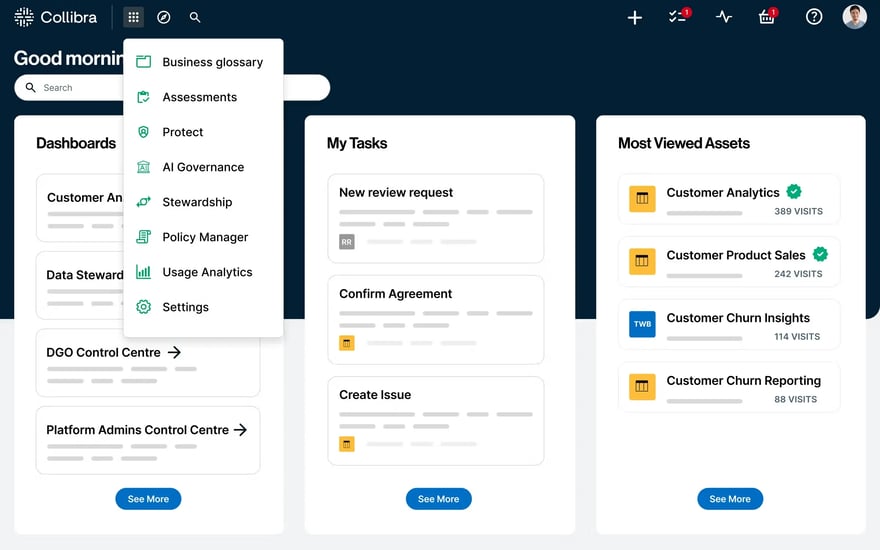
Collibra is one of the best-known enterprise data governance and intelligence platforms. It’s designed for organisations that need structured governance across data catalogues, policies, ownership, quality, privacy and lineage.
It is often used by large, regulated enterprises that need a central operating model for data governance across business and technical teams.
Why choose it?
Collibra is strong when governance must be formalised across complex organisations. It helps teams define data ownership, document policies, manage stewardship and improve trust in internal data assets.
For enterprises with many business units, data domains and regulatory obligations, Collibra can provide the structure needed to align data producers, consumers and governance teams.
It’s particularly relevant where governance maturity is already a board-level or transformation-level priority.
Any flaws?
Collibra can be heavy to implement. Its strength as an enterprise-grade platform also means it may require significant process design, internal ownership and change management.
Organisations that need immediate GTM data improvement may find it too broad unless paired with a high-quality external data layer.
It is best suited to organisations with the resources and governance maturity to support a large platform rollout.
Main features
-
Data catalogue
-
Stewardship workflows
-
Policy management
-
Data quality, lineage, and privacy
-
Business glossary
-
Data marketplace functionality
Pricing
Collibra does not generally publish public pricing. Third-party pricing analyses report enterprise-level annual costs and note that implementation, add-ons and services can materially affect total cost of ownership. Buyers should validate pricing directly with Collibra.
3. Alation
.webp?width=733&height=550&name=Parallax-Chat-With-Your-Data-628x471%20(1).webp)
Alation is a data intelligence and data catalogue platform. It helps organisations discover, understand and govern internal data assets through search, metadata, collaboration and governance workflows.
Its positioning is centred on helping enterprises find trusted data and improve self-service analytics.
Why choose it?
Alation works well where the main governance problem is data discovery.
In large enterprises, people often do not know which datasets exist, who owns them or whether they can be trusted. Alation addresses this by making data assets more searchable and better documented.
Its wiki-like documentation, trust markers and discussion features can help bridge the gap between technical data teams and business users.
Any flaws?
Alation is primarily focused on internal data discovery and governance. It doesn’t improve external revenue data quality on its own.
If CRM records, market coverage or account intelligence are poor, Alation may help catalogue the problem but won’t necessarily fix the underlying GTM data layer.
It may also require sustained adoption from both data teams and business users to deliver full value.
Main features
-
Data catalogue
-
Metadata management
-
Data search
-
Business glossary
-
Data governance workflows
-
Trust indicators
-
Collaboration and support for analytics self-service
Pricing
Alation’s pricing page directs buyers to request a quote. Pricing varies by enterprise requirements, users, data sources and modules.
4. Workiva
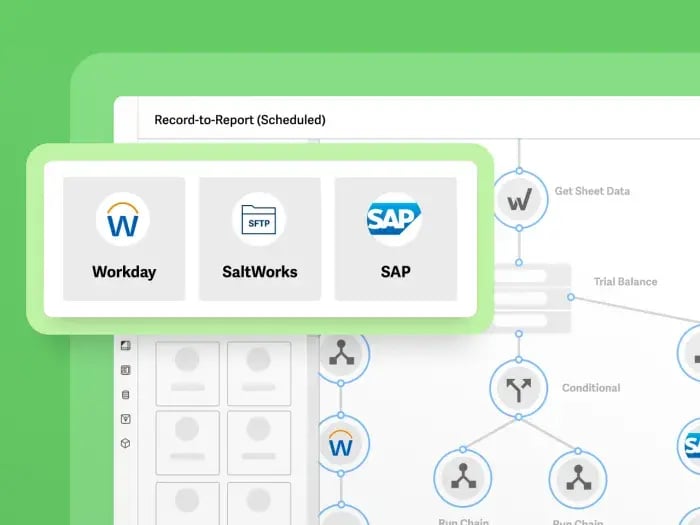
Workiva is a cloud platform for reporting, risk, audit, controls and compliance. It is often used by finance, audit, ESG, legal and risk teams that need controlled reporting processes and evidence management.
Why choose it?
Workiva is valuable where governance is tied to reporting integrity. Enterprises often struggle with version control, manual evidence collection and fragmented reporting workflows. Workiva helps bring structure to these processes.
It is especially relevant for organisations managing financial reporting, sustainability reporting, audit readiness and risk documentation. Its value lies in connecting data, controls, and narrative reporting in a governed environment.
Any flaws?
Workiva is not a general-purpose data governance solution in the same way as Collibra, Alation or Informatica. It’s strongest for reporting, audit and compliance use cases.
Organisations looking for broad technical metadata, data catalogue or GTM data governance will likely need complementary systems.
Main features
-
Connected reporting
-
Audit management
-
Risk management
-
Controls management
-
ESG and sustainability reporting
-
Secure collaboration
Pricing
Workiva’s pricing is package-based and quote-led. Its public pricing page asks buyers to explore plans and packages based on business needs.
5. Osano
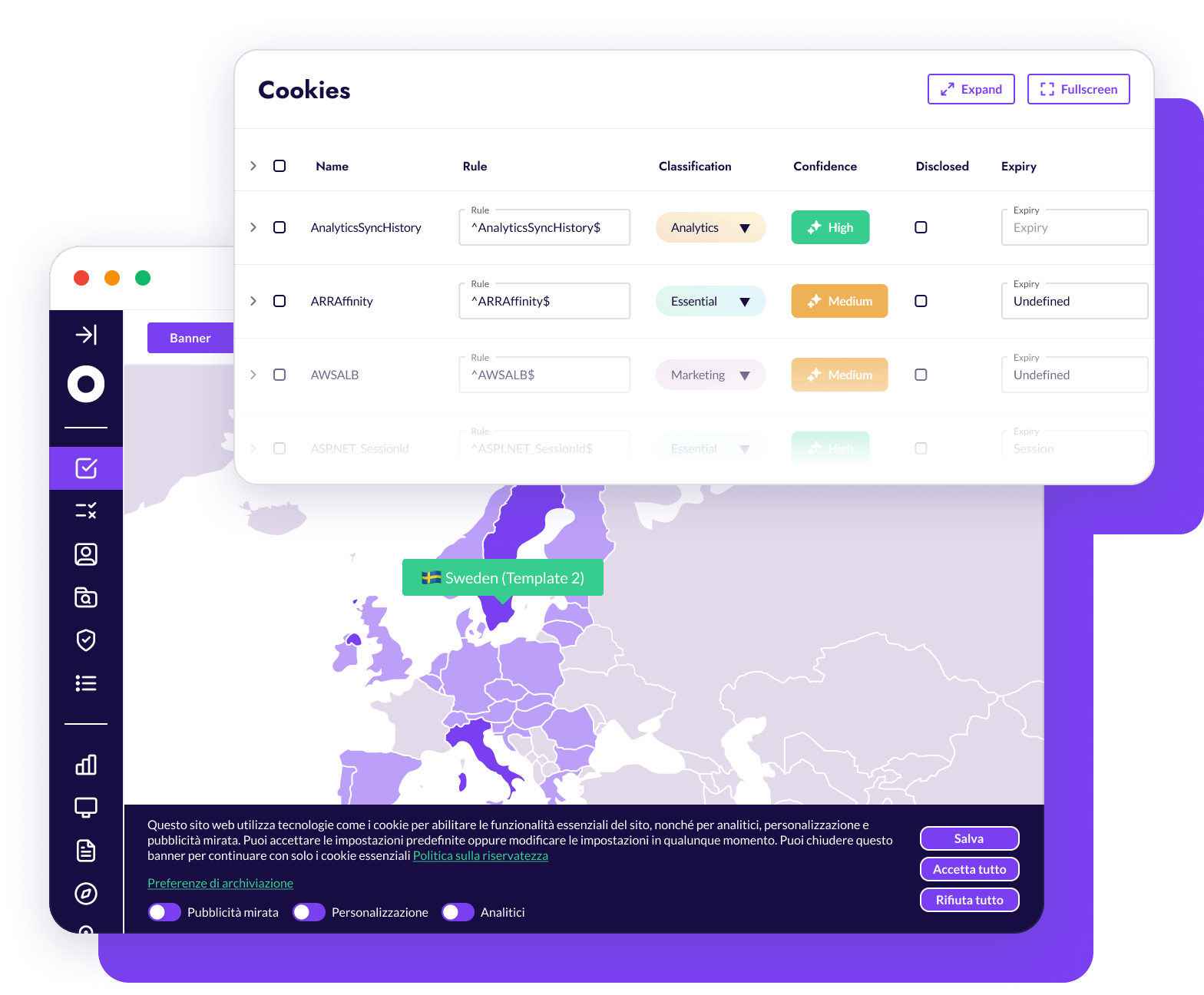
Osano is a data privacy platform focused on consent management, privacy programme management, data subject rights, data mapping and privacy assessments.
It is designed for organisations that need practical support managing privacy obligations across websites, systems and customer data workflows.
Why choose it?
Osano is useful where privacy compliance is the main governance challenge. It helps companies manage consent, automate subject rights requests and maintain better visibility over privacy obligations.
For organisations operating across regions with different privacy requirements, Osano can reduce manual work and provide a more consistent privacy operating model.
Any flaws?
Osano is not a broad enterprise data governance tool. It’s more privacy-focused than metadata-led.
It may not be sufficient for organisations that need deep data lineage, technical cataloguing, revenue data enrichment or enterprise-wide data stewardship.
Main features
-
Consent management
-
Subject rights request automation
-
Data mapping
-
Privacy assessments
-
Privacy programme management
Pricing
Osano publishes plan information on its website and offers different buying paths, including privacy programme capabilities. Exact cost depends on plan, scale and requirements.
6. OneTrust
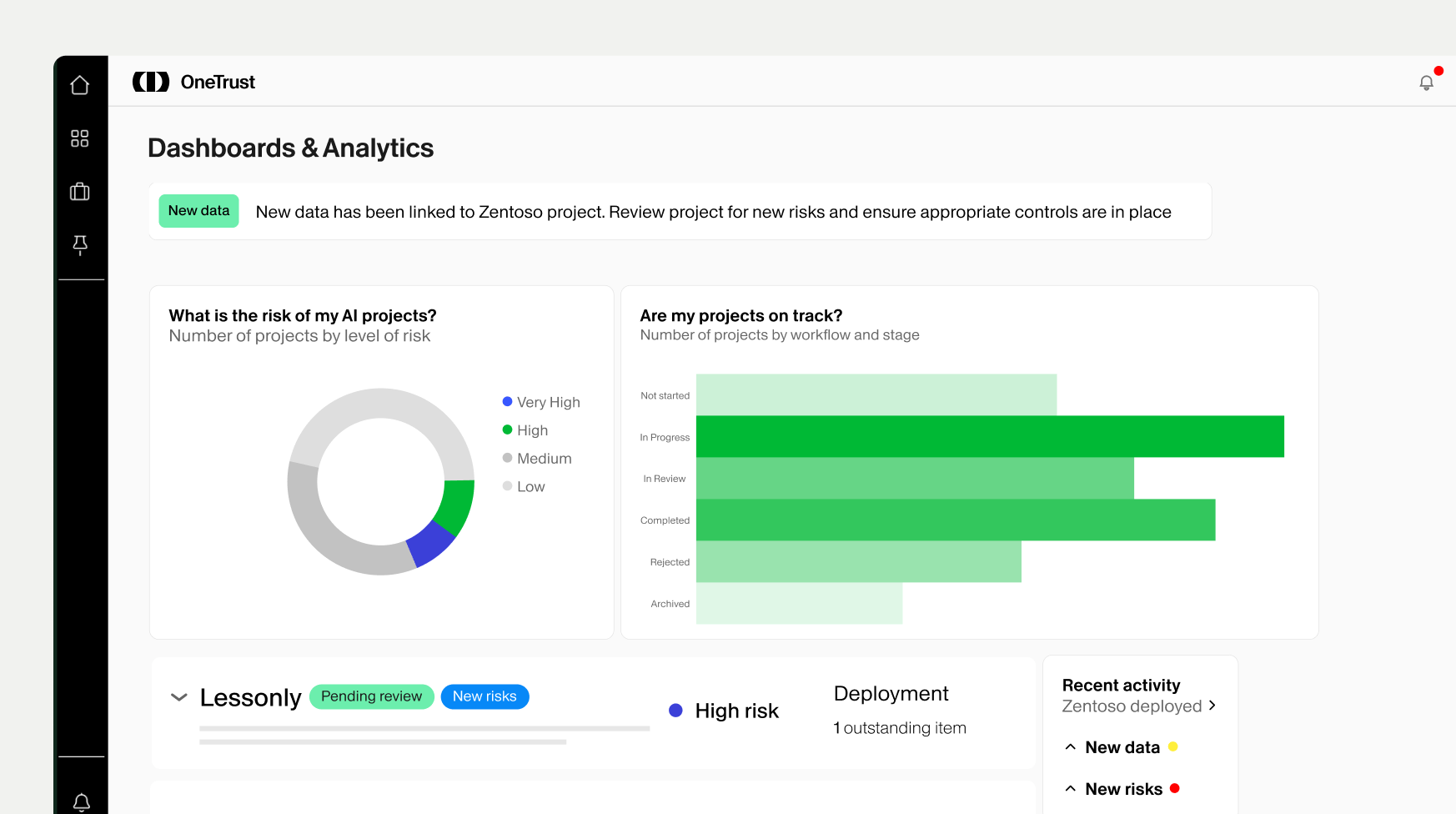
OneTrust is a broad trust, privacy, risk and compliance platform. It supports privacy automation, consent and preferences, AI governance, third-party management and technology risk.
Why choose it?
OneTrust is strong for organisations that want to govern data use through the lens of privacy, consent, risk and compliance.
It helps teams centralise policy, automate workflows and maintain visibility over sensitive data practices.
Its breadth makes it relevant for enterprises managing multiple compliance obligations across jurisdictions and business units.
Any flaws?
OneTrust’s breadth can also make it complex. Organisations should be clear on which modules they need and how these will integrate with existing data, legal, risk and revenue systems.
It’s not primarily a CRM data quality or revenue data infrastructure platform.
Main features
-
Privacy automation
-
Consent and preference management
-
AI governance
-
Third-party management
-
Technology risk & data governance-related workflows
Pricing
OneTrust uses packaged, usage-based pricing. Its public pricing page explains that pricing depends on the solution package and value-based usage meters, including admin users, inventory size, data profiles, visitors, and data volume.
7. Atlan
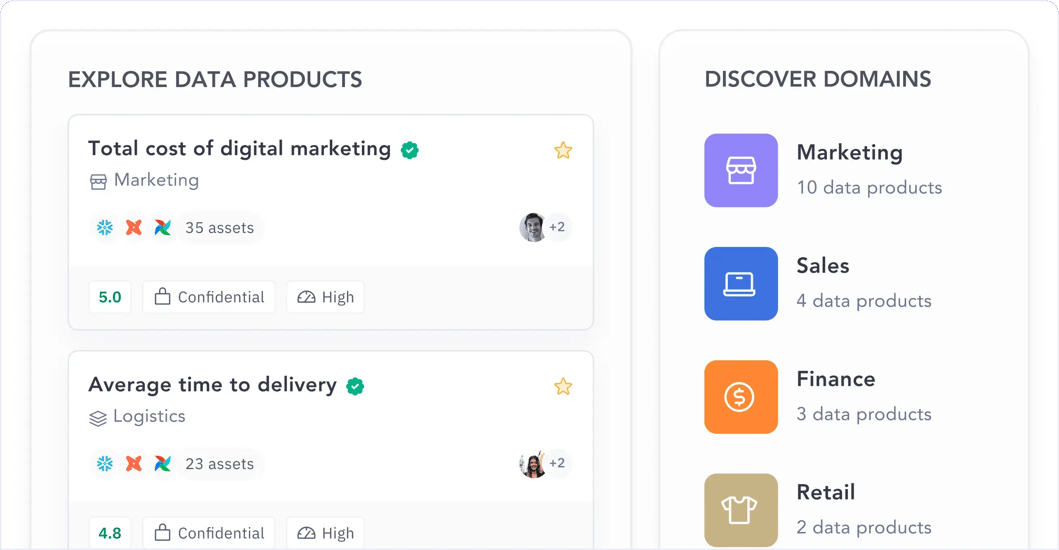
Atlan is an active metadata platform for modern data teams. It helps organisations discover, understand, trust and collaborate on data assets.
Its focus is metadata activation: making governance and context available inside the tools data teams already use.
Why choose it?
Atlan is effective where governance needs to be collaborative and embedded in modern data workflows.
It can help teams connect metadata, lineage, ownership and documentation so that data consumers understand what they are using.
It’s well-suited to organisations building a modern cloud data stack and seeking to improve trust among data engineering, analytics, and business teams.
Any flaws?
Atlan is more focused on internal data assets than external GTM data quality.
It can help teams govern the data estate, but it does not replace a trusted revenue data provider where market coverage, account completeness and compliant contact data are the issues.
Main features
-
Active metadata
-
Data discovery, lineage, and collaboration
-
Governance workflows
-
Profiling
-
Security
-
Integrations with data stack tools
Pricing
Atlan does not typically publish simple self-serve pricing. A UK public sector pricing document listed an Advanced platform package starting at £110,000 per year, with add-ons and services available. Buyers should confirm current pricing directly with Atlan.
8. Informatica
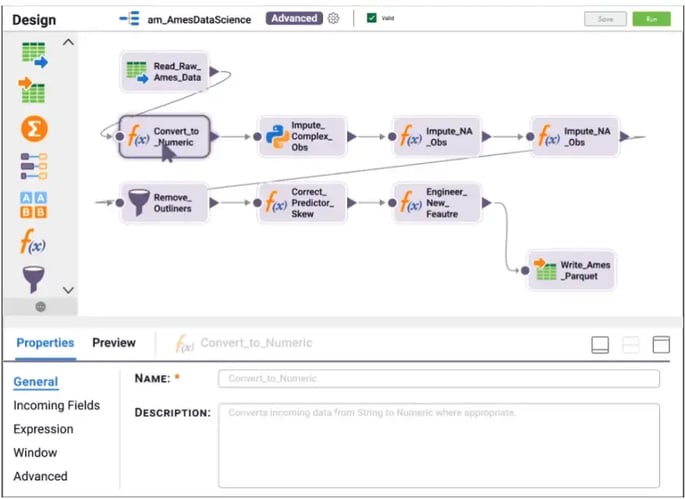
Informatica is an enterprise data management company with a broad cloud platform that covers data integration, data quality, master data management, governance, privacy, and metadata.
It is built for large organisations with complex hybrid and cloud data estates.
Why choose it?
Informatica is strong when governance is closely tied to data integration and data management.
It can support enterprises that need to move, clean, govern and manage data across many systems.
Its breadth is valuable for organisations with complex architectures, legacy systems and large-scale data quality challenges.
Any flaws?
Informatica can be complex and expensive relative to narrower tools. It’s often best suited to enterprises with mature data teams and significant implementation capacity.
For revenue leaders, Informatica may support the broader enterprise data estate, but it won’t automatically solve European GTM data quality unless connected to a trusted external data foundation.
Main features
-
Data integration
-
Data quality
-
Governance
-
Metadata
-
Privacy
-
MDM and related data management services
Pricing
Informatica uses consumption-based pricing through Informatica Pricing Units. Its pricing page describes volume-based pricing and quote-led buying.
9. RecordPoint
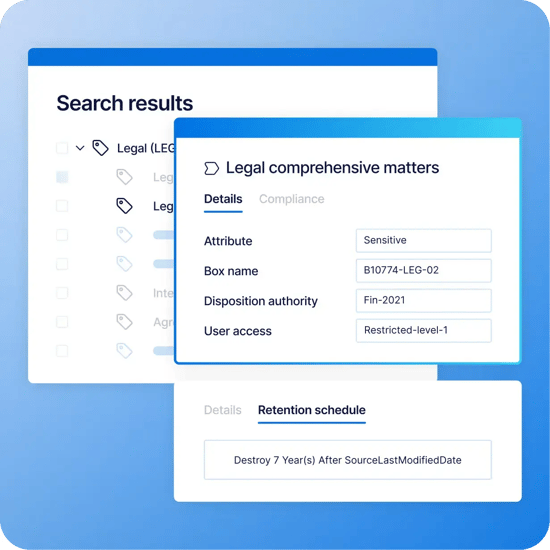
RecordPoint is a data governance and records management platform for regulated organisations. It focuses on data discovery, records management, AI governance, privacy, minimisation and migration.
Why choose it?
RecordPoint is valuable where organisations need to control information lifecycle risk. It helps identify, classify, retain and dispose of records and information across structured and unstructured environments.
This is especially important for regulated sectors where defensible retention, privacy response and records integrity matter.
Any flaws?
RecordPoint is not primarily a revenue data governance tool. It’s strongest for records, information governance and compliance.
Organisations looking to improve CRM coverage, market data or European revenue execution will need a different layer alongside it.
Main features
-
Data discovery
-
Records management
-
AI governance
-
Retention
-
Minimisation
-
Privacy workflows
-
Migration support
Pricing
RecordPoint offers flexible plans for mid-market and enterprise customers and asks buyers to contact the company for a custom quote. Its pricing page highlights predictable pricing rather than consumption-based or per-user uncertainty.
10. Shinydocs
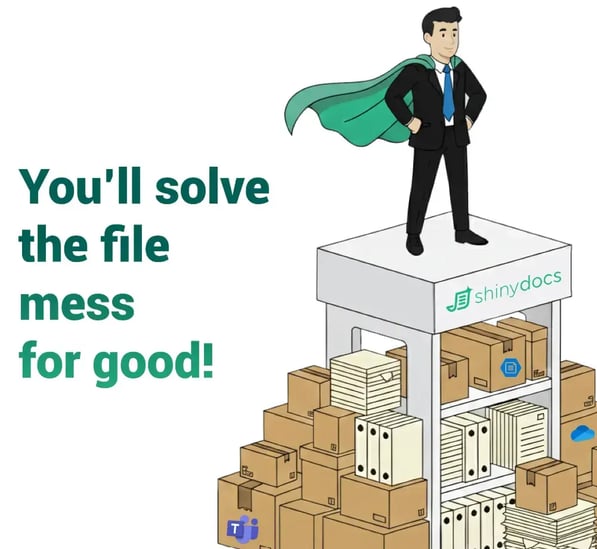
Shinydocs is an AI-powered information governance solution that helps organisations discover, classify and manage unstructured data across repositories.
It is often used to reduce redundant, obsolete and trivial data, support audits, prepare migrations and improve control over content estates.
Why choose it?
Unstructured data is one of the hardest governance problems. It spans file shares, repositories, collaboration platforms, and legacy systems.
Shinydocs helps organisations understand what they have, where sensitive information sits and what should be retained or removed.
This makes it valuable for compliance, storage reduction, eDiscovery, DSAR response and migration readiness.
Any flaws?
Shinydocs is focused on unstructured content governance. It’s not a broad data catalogue for analytics teams and does not provide the external B2B data foundation required for GTM intelligence.
Main features
-
AI-powered discovery
-
Classification
-
Sensitive data detection
-
Duplicate and ROT identification
-
Metadata management
-
Retention support
-
Enterprise search and reporting
Pricing
Shinydocs publishes flexible pricing information and asks buyers to tailor plans to organisational needs.
G2 also lists Shinydocs Pro project pricing and annual subscription pricing, but buyers should confirm directly with Shinydocs before purchase.
11. Databricks Data Intelligence Platform
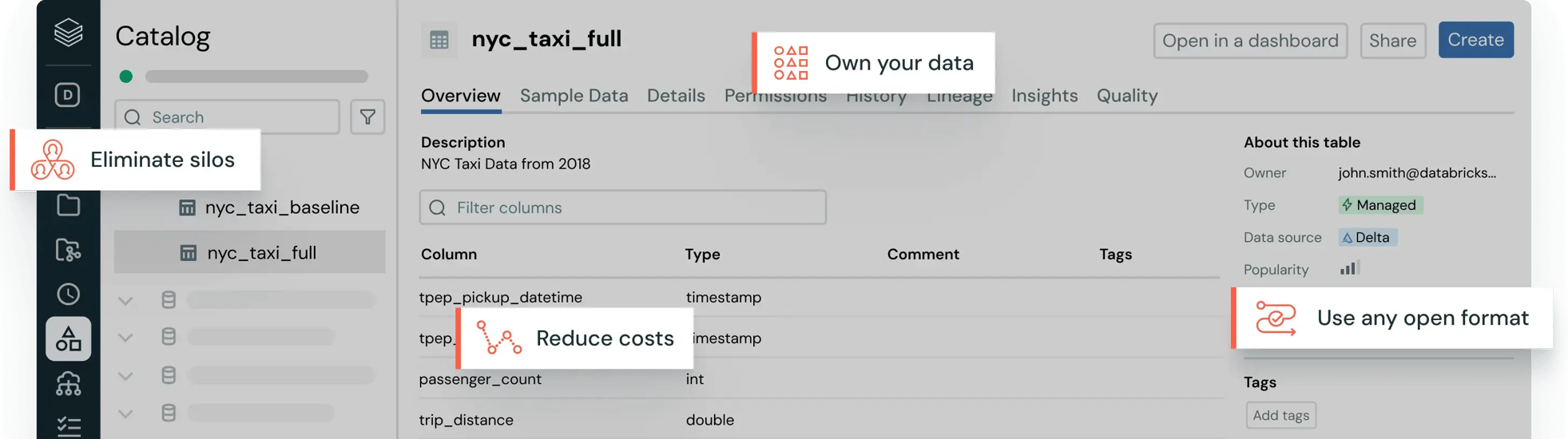
Databricks Data Intelligence Platform is a data and AI platform built around the lakehouse architecture. Its governance capabilities are centred on Unity Catalog, which provides unified governance for data and AI assets.
Why choose it?
Databricks is strong for organisations building AI, analytics and data engineering workflows at scale. Unity Catalog helps teams govern tables, files, models and other data assets across Databricks environments.
For enterprises investing heavily in AI, this matters. Models require governed access, clear lineage, secure sharing and consistent policy enforcement. Databricks helps bring governance closer to where data science and engineering work happens.
Any flaws?
Databricks is not a standalone governance tool for every data environment. It is strongest when Databricks is already central to the organisation’s data platform. It also does not address external GTM data quality on its own.
Main features
-
Governance for data and AI assets
-
Access control
-
Discovery, lineage, and classification
-
Compliance policies
-
Quality monitoring
-
Secure collaboration
-
Observability
Pricing
Databricks pricing depends on cloud provider, workload, compute, platform features and usage.
Governance capabilities such as Unity Catalog are part of the broader Databricks platform model. Buyers should model pricing against expected workloads and consumption.
12. OvalEdge
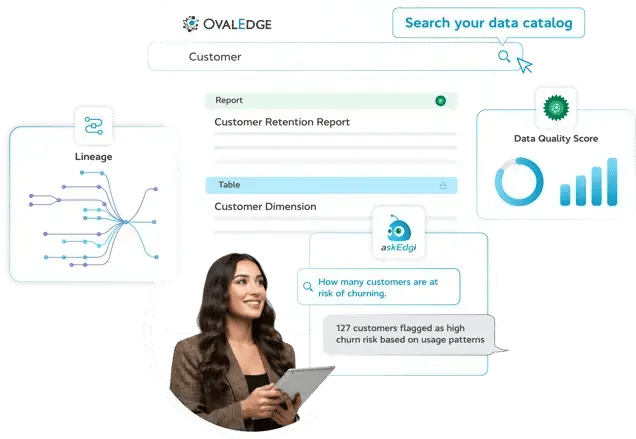
OvalEdge is a data governance and data catalogue platform designed to help organisations manage data assets, improve business user access and support governance workflows.
Why choose it?
OvalEdge is useful for organisations that want data catalogue and governance capabilities without the same level of enterprise complexity associated with some larger platforms.
It can help teams document assets, assign ownership, manage business glossaries and support analytics governance.
Any flaws?
OvalEdge may not have the same enterprise depth or ecosystem presence as larger data governance solutions. It is also not designed to solve external revenue data quality or European market data coverage.
Main features
-
Data catalogue
-
Business glossary
-
Lineage
-
Data quality
-
Governance workflows
-
Stewardship
-
Collaboration
-
Analytics support
Pricing
OvalEdge publishes pricing information for enterprise data governance and analytics teams. G2 lists pricing examples for users and connectors, but buyers should confirm current costs directly with OvalEdge.
FAQs
See why trusted European data changes revenue execution
Cognism gives revenue teams the accurate, compliant and current B2B data they need to plan, prioritise and execute across Europe with confidence.
Strengthen your CRM, improve market coverage and build AI-ready revenue workflows on a data foundation your teams can trust.
Book a Cognism demo today.
/CTAs%20(SEO)/daas-cta.webp?width=1500&height=530&name=daas-cta.webp)