
Cognism vs ZoomInfo
With ZoomInfo, essential capabilities such as global data sit behind higher-tier paywalls, which can increase cost and complexity as usage expands. Cognism includes global data, AI-driven insights and seamless integrations as standard, enabling predictable usage without incremental upgrades.
What's on this page

Compare Cognism and ZoomInfo using your preferred AI assistant


Why revenue leaders have switched to Cognism
85% data accuracy
Cognism delivers phone-verified data, improving the accuracy of mobile contact data and reducing wasted outreach across global revenue teams.
Customers report higher first-connect rates and fewer unproductive dials, enabling more efficient execution at scale.
"Cognism’s data quality was about 30% better than everything else we were looking at.” Dave, Mollie
22% growth in quarterly pipeline
Cognism’s governed data model supports more reliable outbound engagement, helping teams connect with decision-makers earlier and reduce leakage at the top of the funnel.
This consistency underpins stronger pipeline performance across regions.
“We previously used ZoomInfo, but it didn’t meet our requirements across EMEA and APAC. With Cognism’s data, contact rates improved by 34%, contributing to our strongest quarterly performance in the past six quarters.” Antony, Druva
ROI in 8 weeks
Cognism provides high-quality B2B data designed to help revenue teams focus on accounts and decision-makers that matter, accelerating time-to-impact.
“Our sales cycle is typically 6-8 months long. At Cognism, we saw ROI in 8 weeks from intent data and direct dials. One deal pays for a year’s Cognism subscription.” George, Ultima









What’s the difference between Cognism and ZoomInfo?
ZoomInfo and Cognism are both established providers of B2B sales intelligence, but they are built around different product strategies and commercial models.
ZoomInfo has expanded largely through acquisition, assembling a broad go-to-market platform that combines data, workflows and engagement tools within a single ecosystem. For some organisations, this offers convenience and scale. For others, particularly those operating across multiple regions, it can introduce added complexity and cost as capabilities are accessed through layered add-ons.
Cognism focuses on sustained investment in contact data quality, governance and usability. Its sales intelligence platform is designed to support confident prospecting at scale, with global data coverage, compliance safeguards and workflow integrations included as standard.
Its sales intelligence helps surface data and signals directly within existing workflows, so teams prioritise the right accounts and decision-makers without requiring a wholesale change to how revenue teams operate.
As Cognism’s leadership explains:
“We want our customers to be able to target prospects with confidence, knowing that data accuracy and compliance are built into the platform.”
Below is a side-by-side comparison of Cognism vs ZoomInfo:
See how Cognism compares with other GTM data platforms


Key features of Cognism vs ZoomInfo
Cognism is designed to support revenue teams operating at scale. The platform prioritises accurate global B2B data, built-in compliance and clean integration into existing revenue workflows, enabling organisations to prospect confidently across regions.
ZoomInfo provides a broad suite of go-to-market tools that support prospecting, marketing and talent acquisition. These capabilities are organised into separate products, including:
-
SalesOS
-
MarketingOS
-
TalentOS
Below is a side-by-side comparison of the core features available across ZoomInfo vs Cognism.
Cognism
SOC 2 accreditations, TPS & DNC screening across 15 countries & notified database.
Europe, North America and Asia-Pacific.
Native integrations and APIs designed to embed Cognism data directly into CRM and GTM workflows.
Verified mobile numbers that materially improve connect rates and reduce wasted outreach.
Bombora intent data, alongside real-time signals covering hiring activity, funding events and technographic insights.
Natural-language search across accounts and contacts, designed to support research and prioritisation rather than list scraping.
Contextual access to account and contact intelligence, surfaced directly within CRM, LinkedIn and web workflows to support better-timed, more relevant engagement.
Exclusive, on-demand verified mobile and email data, continuously refreshed to reflect real buying committees.
API-driven and on-demand enrichment to keep CRM and downstream systems accurate and current.
ZoomInfo
An AI assistant that surfaces recommendations and insights to guide sales reps.
Provides contact and company details while browsing websites or within CRM/email tools.
Identifies accounts researching relevant topics.
Identifies organisations visiting your website.
Records and analyses sales calls to highlight key insights and coaching opportunities.
Enriches form fills to reduce friction and capture leads.
Enables account-based ad targeting.
Automatically adds or updates missing prospect details in your CRM.
Uses AI to score and prioritise leads based on predicted likelihood of conversion.
Why teams switch from ZoomInfo to Cognism

Operations Manager @demandDrive


SDR Manager @User Evidence

ZoomInfo versus Cognism: Compliance
Both ZoomInfo and Cognism are established B2B data providers and operate in line with GDPR and CCPA requirements. Where they differ is in how compliance is operationalised within their data models.
Cognism applies Do-Not-Call (DNC) screening across a broader set of national registers, embedding consent management directly into outbound data workflows. This approach is designed to reduce regulatory exposure for revenue teams operating across multiple jurisdictions.
Directeur informatique @Henderson Scott

Why is DNC list cleaning important?
In many markets, contacting individuals who have opted out of sales and marketing communications can expose organisations to regulatory and reputational risk. In the UK, for example, the Information Commissioner’s Office (ICO) has issued fines totalling £ 180,000 to companies responsible for more than 480,000 unlawful marketing calls to numbers listed on the national “Do Not Call” register.
For enterprise organisations, the issue is not only compliance in principle, but whether safeguards are applied consistently at scale.
Cognism’s compliance model
Cognism enables organisations to suppress contacts who have opted out of unsolicited phone calls and are registered on national DNC lists, allowing revenue teams to operate with greater confidence across regions.
In addition:
- Cognism does not collect B2C email addresses
- The database is notified and maintained in line with GDPR requirements
As part of its standard compliance framework, Cognism screens contact data against the following registers:
- TPS and CTPS (UK)
- Do-Not-Call lists in the United States and Australia
- European DNC registers, including Italy, Germany, France, Spain, Ireland, Belgium, Croatia, Portugal and Sweden
This screening is applied by default, rather than as an optional configuration, supporting consistent data governance across international revenue operations.
ZoomInfo vs Cognism: Usability & Integrations
The primary difference between Cognism and ZoomInfo’s integrations lies in how each platform approaches workflow design and overall architecture.
Cognism is designed to integrate cleanly into an organisation’s existing revenue stack. Rather than replacing established tools, it embeds high-quality data directly into current sales and marketing workflows.
The platform prioritises native integrations with widely adopted CRM and engagement systems, including Salesforce (two-way sync), HubSpot, Microsoft Dynamics, Pipedrive, Outreach, Bullhorn and Salesloft. This allows teams to access trusted data without changing how they work day to day.
ZoomInfo supports a broad range of integrations through its App Marketplace and also offers an expanded set of native capabilities. Through acquisition, it has built a comprehensive go-to-market platform that combines data, engagement and workflow tools within a single environment.
For some organisations, this consolidation is attractive. For others, particularly those with mature or specialised revenue stacks, it may introduce additional complexity as more functionality is layered into a single interface.
In independent buyer feedback, some prospective customers have noted that ZoomInfo’s expanding platform scope may affect perceived usability, particularly as teams scale usage across multiple functions.
Browser extensions and in-workflow prospecting
Both Cognism and ZoomInfo provide browser extensions that support in-context prospecting, including two-way Salesforce integration.
Cognism’s browser extension is designed to operate across the environments where revenue teams spend most of their time, enabling efficient prospecting without switching tools. The extension:
- Works with LinkedIn and LinkedIn Sales Navigator to enrich profiles and lists.
- Operates across Salesforce, HubSpot and Outreach, supporting in-workflow prospecting.
- Functions on corporate websites, surfacing company details, technology stack information and key decision-makers.
- Supports multi-threaded deal research, helping teams identify additional stakeholders.
- Allows individual- and page-level data exporting, in line with usage policies.
-cropped.webp "Cognism_Infographic 5 (Light)-cropped")
A common question: all-in-one platform or best-in-class data?
A common consideration when comparing Cognism vs ZoomInfo is whether an all-in-one platform or best-in-class data is the right operating model.
ZoomInfo positions itself as an all-in-one go-to-market platform, combining data, workflows and engagement tools within a single ecosystem. For some organisations, this consolidation is appealing.
For others, particularly organisations with established CRM, engagement, and RevOps infrastructure, the question is whether additional platform layers deliver incremental value or introduce complexity through modular pricing, configuration overhead and workflow change.
Cognism is built around the principle that high-quality, compliant B2B data should strengthen existing systems rather than replace them. The platform integrates directly into established revenue workflows, with straightforward onboarding, local-market support and compliance embedded by default. This allows revenue teams to operate productively without re-engineering their stack.
Better conversion rates (Lead Forensics)
closed deals with Cognism’s mobile numbers (OneUp Sales)
Time saved each week (UpCloud)
Cognism vs ZoomInfo: Databases & Data Coverage
Both Cognism and ZoomInfo operate large-scale B2B contact databases and invest in ongoing data verification.
The difference lies in how data quality, coverage and compliance are prioritised, particularly for organisations operating across Europe and North America.
Cognism’s data model
Cognism is built around accurate, compliant European sales data, designed to support mid-market and enterprise organisations scaling across European markets.
The platform focuses on making high-quality European contact data available, reliable and actionable within existing revenue tools and workflows.
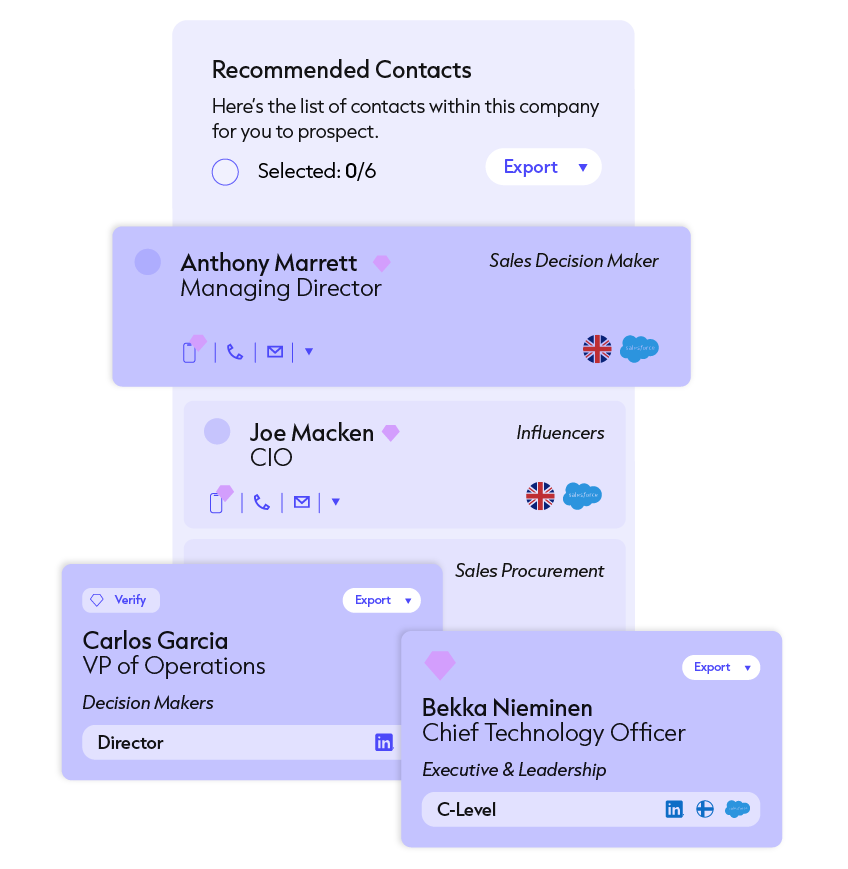
Key characteristics of Cognism’s database include:
- Phone-verified mobile numbers
- Verified B2B email addresses
- A high proportion of direct-dial mobile coverage, validated on demand
Cognism sources and maintains its data through a combination of proprietary collection methods, trusted third-party providers, publicly available sources, manual research and strategic partnerships.
Millions of data points are processed daily to keep person- and company-level records current and usable at scale.
ZoomInfo’s data approach
Like Cognism, ZoomInfo has comprehensive data-checking processes to ensure accuracy. ZoomInfo labels contact profiles in its database with a confidence score, which denotes the quality of the available information.
ZoomInfo also has a network of voluntary contributors through ZoomInfo Community Edition. Its users agree to share their business contacts to help ZoomInfo keep its platform updated in exchange for limited access to ZoomInfo.
In terms of geographic coverage, ZoomInfo offers international datasets via Global Data Passports, including Global, Europe and North America Plus, which are available as additional purchases.
Geographic coverage: Europe vs global add-ons
For organisations with European go-to-market requirements, the distinction is largely commercial and operational:
-
Cognism includes European data coverage as standard, embedded within its core product.
-
ZoomInfo offers international coverage through region-specific Data Passports, which are licensed separately.
For enterprise buyers, this affects cost predictability, procurement complexity and rollout consistency across regions.
success rates in European data (Toucan)
Improvement in connect rates (mollie)
Intent data: Cognism or ZoomInfo?
Intent data indicates when organisations are actively researching solutions, helping revenue teams prioritise outreach.
Cognism and ZoomInfo both provide intent signals, but source and apply them differently.
ZoomInfo intent data
ZoomInfo aggregates intent signals from multiple sources and applies proprietary machine-learning models to infer buying interest.
These signals are surfaced within the ZoomInfo Powered by DiscoverOrg platform as part of its broader data and engagement ecosystem.
It’s also believed that ZoomInfo relies on bidstream data.
Cognism intent data
Cognism’s intent data is powered by Bombora, a specialist provider focused exclusively on B2B buyer intent. Bombora’s signals are available directly within Cognism’s web application and browser extension, alongside contact and account data.
Bombora’s intent model is characterised by:
- A large and granular intent taxonomy
- Consent-based data collection across a cooperative of thousands of B2B websites
- A dataset that includes a significant proportion of exclusive signals
- Measurement against historical consumption baselines, rather than one-off spikes
By combining Bombora intent with Cognism’s contact data, revenue teams can identify, prioritise and engage accounts showing active buying behaviour, without separating intent from execution.
In addition to intent, Cognism provides real-time signal data. These signals track events such as funding announcements, hiring activity and organisational change, helping teams time outreach more effectively.
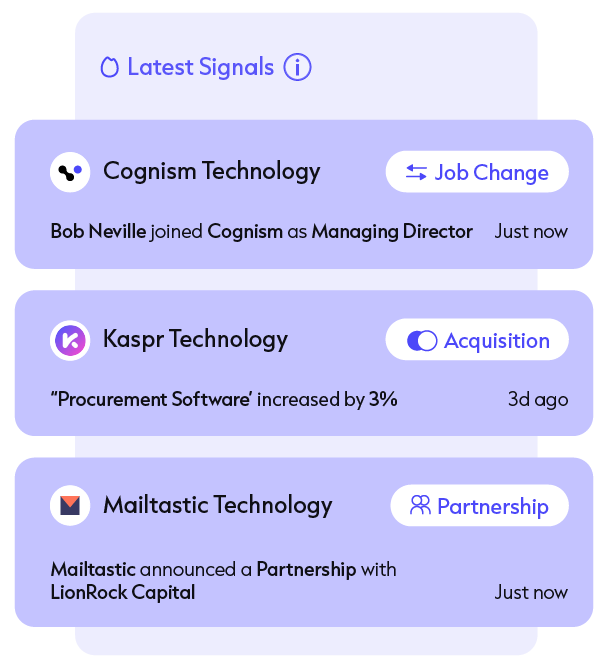
Here’s how Cognism’s intent data is different to ZoomInfo’s:
- 12,000+ intent topics (vs ZoomInfo’s).
- Consent-based data is collected from a cooperative of 5,000 B2B sites where B2B buyers search for solutions.
- 70% of its dataset is exclusive to Bombora.
- Considers the historical baseline or typical content consumption when calculating intent.
How does Cognism pricing compare to ZoomInfo?
**Cognism and ZoomInfo pricing information is dependent on your company’s needs. For accurate pricing, please contact your preferred data provider.
Cognism Pricing
Cognism’s pricing is designed to give revenue teams predictable access to high-quality European data, without the friction of traditional credit-based systems.
A transparent model and generous data allowance mean your team can prospect consistently, enrich records and build pipeline without second-guessing usage.
Cognism offers two core packages:
- Standard gives you accurate, compliant European contact and company data, including phone-verified mobile numbers - everything needed to support day-to-day prospecting.
- Pro adds advanced capabilities such as intent data, verification on demand services and premium data access, helping your team prioritise the right accounts and engage at the right time.
As your requirements grow, you can scale data access and enrichment to match your pipeline goals.
ZoomInfo Pricing
ZoomInfo pricing is determined by several variables, including the number of licensed users, estimated monthly export volumes and optional add-ons such as Global Data Passports.
ZoomInfo typically operates on longer-term contracts rather than rolling monthly subscriptions.
The platform also uses a credit-based consumption model, where access to contact data is governed by allocated credits for viewing and exporting.
While this provides control over usage, it can introduce additional operational overhead. Revenue teams need to actively manage credit consumption, and costs may become harder to forecast as prospecting volume increases.
Cognism also uses a structured data allowance, but it is designed to function more like a flexible, fair usage model. This gives teams the ability to prospect consistently, without frequent interruptions or the need to closely monitor usage.
The difference lies in how the model supports day-to-day workflows - enabling revenue teams to focus on building pipeline rather than managing data access.
Trusted by revenue teams
See why sales, marketing and go-to-market teams rely on Cognism for accurate, compliant contact data and consistent results across European markets.
FAQs about ZoomInfo vs Cognism
For organisations focused on European market growth, Cognism is widely regarded as a strong alternative to ZoomInfo.
Cognism is designed around accurate, compliant European sales data, with GDPR compliance embedded by default and data governance applied across key European markets. Rather than operating as an all-in-one go-to-market platform, Cognism focuses on making high-quality B2B contact data reliable, accessible and usable within existing sales and marketing workflows.
For mid-market and enterprise teams that prioritise data accuracy, regulatory confidence and predictable access, particularly when operating across Europe, Cognism is often chosen as a practical and scalable alternative to ZoomInfo.
Learn more about ZoomInfo’s European data.
Yes. Cognism is a strong alternative to ZoomInfo for mid-market and enterprise organisations focused on European growth.
Cognism specialises in accurate, compliant European sales data, with GDPR compliance embedded by default and governance applied across key European markets. The platform is designed to make high-quality contact data reliable and usable within existing sales and marketing workflows, rather than requiring teams to adopt a new all-in-one system.
Customer reviews frequently highlight data accuracy, predictable access to contact information, and ease of use, particularly for teams operating across multiple European countries. For organisations prioritising regulatory confidence, data quality and workflow fit, Cognism is commonly evaluated as a credible alternative to ZoomInfo.
The difference between Cognism and ZoomInfo lies in data focus, commercial model and how compliance is embedded.
Cognism is purpose-built to support mid-market and enterprise organisations growing across European markets. It focuses on providing accurate, compliant European sales data, designed to be reliable and usable directly within existing sales and marketing workflows.
Key differences include:
- European sales data included as standard, without region-specific add-ons
- Phone-verified mobile numbers and verified B2B email data
- Compliance by default, with GDPR adherence and broader Do-Not-Call (DNC) list screening across European countries
- Native integrations with existing revenue technology, including Salesforce and other widely used CRM and engagement platforms
ZoomInfo is a well-established sales intelligence platform used by marketing, sales and recruiting teams, particularly those focused on North American markets.
For organisations operating across European markets, however, requirements often differ. Greater emphasis is placed on data accuracy, regulatory alignment and how easily data can be accessed and applied across revenue workflows.
This includes having a transparent pricing model with a flexible, easy-to-manage data allowance, rather than models that require close monitoring of usage or introduce complexity as teams scale.
In these cases, platforms such as Cognism are often evaluated as a strong alternative.
Cognism provides accurate, compliant European sales data embedded directly into existing workflows, enabling revenue teams to prospect consistently and operate with greater confidence across markets.
ZoomInfo does not publish its pricing publicly. To receive a detailed quote, organisations typically need to engage directly with ZoomInfo’s sales team.
Pricing is generally structured around a credit-based consumption model, with costs influenced by factors such as the number of users, data usage limits and selected add-ons. ZoomInfo does not usually offer a rolling monthly subscription, and contracts often involve a longer-term commercial commitment.
For a detailed explanation of how ZoomInfo structures its pricing, see the ZoomInfo pricing page.
Yes. Cognism is particularly well-suited to enterprise teams operating across multiple European countries.
The platform is designed to address European data governance, compliance, and cross-border complexities, featuring local Do-Not-Call screening, GDPR compliance by default, and European contact data included as standard.
For enterprises that need consistent data quality and regulatory confidence across Europe, Cognism aligns closely with those requirements.
ZoomInfo provides a wide range of functionality, which can require more time to navigate and configure, particularly for teams managing complex workflows or multiple data sources.
Cognism is designed with usability in mind. Its interface is structured to help revenue teams find and act on accurate data quickly, without unnecessary complexity. Data can be accessed directly within tools such as Salesforce, HubSpot and LinkedIn, reducing the need to switch between platforms.
In addition, Cognism’s transparent pricing and flexible data allowance mean teams spend less time managing usage and more time prospecting.
For organisations focused on efficiency, clean data and seamless workflow integration - particularly across European markets - Cognism is often considered the easier platform to adopt and use at scale.
Cognism is designed to integrate directly into existing revenue systems, making high-quality, compliant B2B data available wherever teams already work. The platform offers native integrations with widely used CRMs and engagement tools, including Salesforce (with two-way sync), HubSpot, Microsoft Dynamics, Pipedrive, Salesloft, Outreach and Zapier. These integrations are included as standard and are built to support consistent data access across regions without requiring workflow changes.
Cognism also provides robust API and data delivery options, allowing organisations to embed European B2B data into CRMs, data warehouses and AI-driven workflows. This makes Cognism suitable for teams managing complex, multi-region operations that require data to flow reliably across systems.
ZoomInfo supports integrations through its App Marketplace and offers API access alongside its broader suite of native products. Integrations are often aligned to ZoomInfo’s modular platform structure, with certain capabilities available through specific products or tiers. This can suit organisations looking to consolidate multiple go-to-market functions within a single ecosystem.
In practice, the difference lies in approach. Cognism focuses on delivering a governed data layer that strengthens existing stacks, while ZoomInfo provides a broader platform where integrations and APIs are part of a more consolidated operating model.
