If you’ve noticed distorted forecasts, weekend segmentation and low confidence from your team when it comes to their data-related workflows, it’s time to look for data quality software.
The risk of bad data is increasing as revenue organisations rely more heavily on automation and AI.
This matters even more if you’re currently expanding, or considering expanding, into Europe. Market complexity, regulation and fragmented data availability make CRM quality harder to maintain and more important to govern.
This guide compares the best data quality software available today, including enrichment platforms, cleansing tools, verification layers, and enterprise data management systems.
Best data quality software: quick comparison
| Tool | Best for |
| Cognism | Compliant, accurate European B2B data for enterprise revenue teams |
| Breeze Intelligence | Native data enrichment for HubSpot users |
| SAP Data Services | Enterprise data quality, cleansing and integration |
| NeverBounce | Email verification and list cleaning |
| CloverDX | Data integration, validation and transformation workflows |
| Datanyze | Technographic data and lightweight contact enrichment |
| Cloudingo | Salesforce deduplication and CRM cleansing |
| Clay | Flexible enrichment workflows across multiple data sources |
| EnrichHQ | Continuous CRM enrichment and email validation |
| Leadfeeder | Website visitor identification and account-level intent signals |
| Apollo.io | CRM enrichment and contact database coverage |
| ZoomInfo | Large-scale B2B enrichment and CRM data refresh |
| Openrise | RevOps data automation, cleansing and routing |
1. Cognism
Best for enterprise revenue teams that need accurate, compliant B2B data across Europe and the UK.
/(SEO)%20Product%20-%20Compressed/Cognism-alternative-competitor-listicle-webp-2.webp?width=999&height=550&name=Cognism-alternative-competitor-listicle-webp-2.webp)
Cognism is the best software for data quality management. It offers a premium European data layer for revenue teams that need CRM data they can trust.
Built for organisations where data quality is not a sales support function, but a foundation for planning, prioritisation, execution, forecasting and AI-driven GTM workflows.
Cognism’s strength lies in its combination of accuracy, compliance and European coverage. Its data verification process uses human verification to confirm mobile numbers, giving revenue teams higher confidence in contact data before it enters the CRM.
Cognism also screens data against major Do Not Call and TPS lists and supports GDPR and CCPA data practices, with ISO 27001 and SOC 2 Type 2 compliance supporting enterprise security and governance requirements.
For organisations expanding into Europe, this matters. European markets are fragmented by language, regulation, business culture and data availability. A US-centric data model often fails to provide the accuracy, compliance posture and operational depth needed for consistent execution across countries.
Cognism helps revenue teams build a more reliable CRM foundation by enriching records with current, compliant and decision-grade data. That supports cleaner segmentation, stronger territory planning, more reliable routing and better AI outputs.
Key strengths:
- Accurate, compliant B2B data across Europe and the UK
- Human-verified mobile data and email dataset
- GDPR and CCPA-compliant data practices
- Do Not Call and TPS list screening
- CRM enrichment for Salesforce, HubSpot, and more
- Strong fit for enterprise GTM teams using CRM data for planning, execution and AI workflows

2. Breeze Intelligence
Best for HubSpot customers who want native CRM enrichment inside their existing platform.
/Competitors%20and%20other%20tools/Breeze-Intelligence-Copilot-listicle-alternative-webp-option2.webp?width=819&height=550&name=Breeze-Intelligence-Copilot-listicle-alternative-webp-option2.webp)
Breeze Intelligence is HubSpot’s AI-powered data enrichment layer. It helps teams fill missing CRM fields, improve record completeness, and make HubSpot data more useful for segmentation, scoring, and reporting.
The main advantage of this data quality tool is convenience. For organisations already committed to HubSpot, Breeze Intelligence reduces the need for additional enrichment tools and fits naturally into existing CRM workflows. It can serve as a practical starting point for teams looking to improve data completeness without building a separate enrichment stack.
The limitation is scope. Breeze Intelligence is strongest as a native HubSpot enrichment layer, not as a broad enterprise data infrastructure platform. Teams operating across multiple CRMs, regions or compliance environments may still need a more specialised B2B data provider or governance layer.
Key strengths:
- Native HubSpot experience
- Automated enrichment for CRM records
- Useful for improving field completion
- Good fit for HubSpot-centric teams
3. SAP Data Services
Best for large enterprises managing data quality as part of a broader data governance and integration programme.
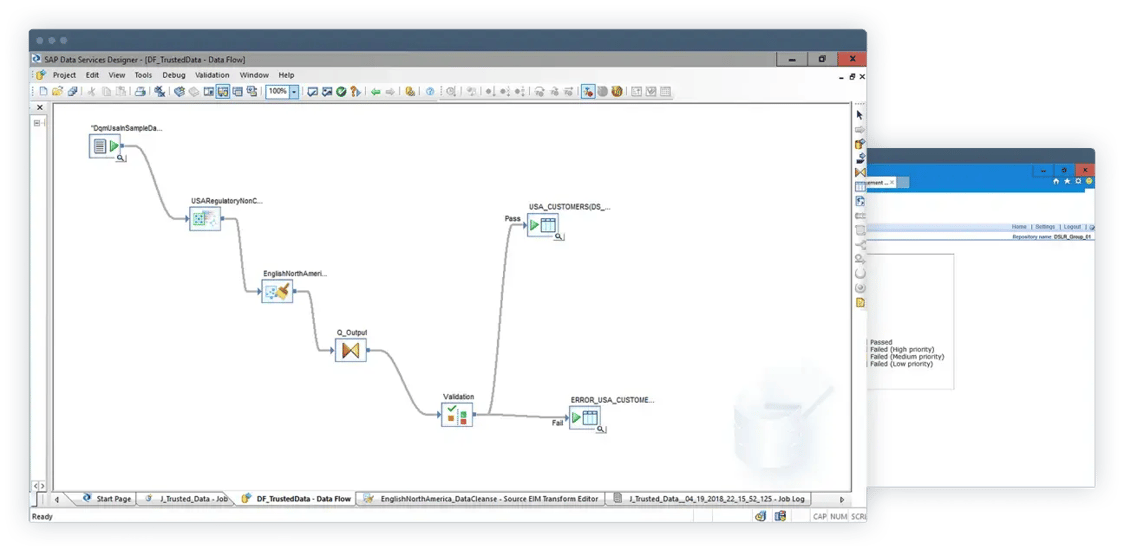
SAP Data Services operates at the enterprise infrastructure level. It supports data integration, cleansing, transformation and quality management across structured and unstructured data sources. SAP describes the platform as helping organisations turn data into a trusted, ready-to-use resource through integration, quality and cleansing capabilities.
For CRM teams, SAP Data Services is relevant when customer and account data quality is part of a larger enterprise architecture. That might include ERP, finance, customer success, analytics and data warehouse environments.
This is not a lightweight CRM clean-up tool. It is a broader data management system for organisations with complex data flows, governance requirements and technical resources.
Key strengths:
- Enterprise-scale data cleansing and transformation
- Strong fit for complex data architectures
- Supports broader governance and integration programmes
- Suitable for large organisations with SAP environments
4. NeverBounce
Best for email verification and list cleaning before outbound campaigns.
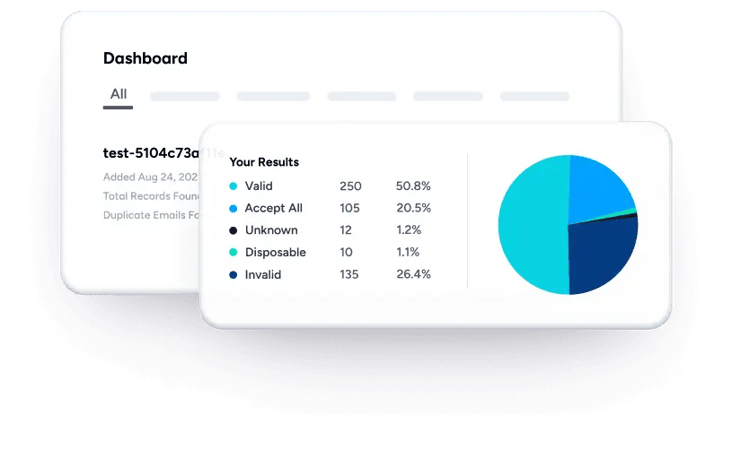
NeverBounce focuses on a narrow but important part of data quality: email verification. It helps teams identify invalid, risky or undeliverable email addresses before they damage sender reputation or campaign performance.
This makes it a useful verification layer in a broader data quality stack. It won’t solve CRM decay, duplicate accounts, missing firmographics or inaccurate phone data. But it can reduce one of the most common and costly symptoms of poor data quality: failed email delivery.
For revenue teams, NeverBounce works best as a supporting tool rather than a primary CRM data quality platform.
Key strengths:
- Email verification
- List cleaning
- Deliverability protection
- Simple use case and fast deployment
5. CloverDX
Best for data teams building validation, transformation and integration workflows.
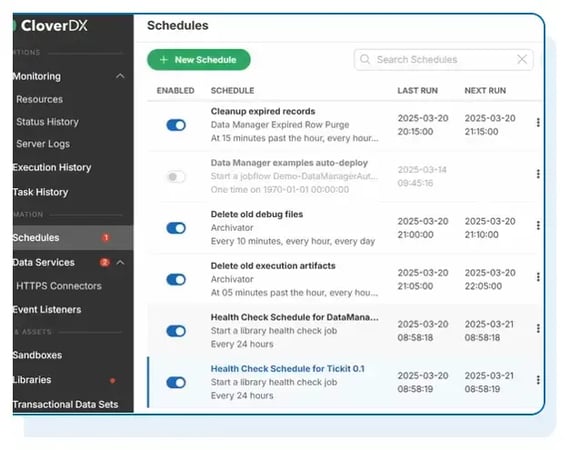
CloverDX is a data quality monitoring software that helps organisations automate data pipelines, validate data and manage transformation workflows. Its data quality capabilities include profiling, cleansing and validation, which help teams identify errors and inconsistencies before they move downstream.
For CRM teams, CloverDX is useful when data quality issues arise from complex system integrations. It can help ensure that data moving between CRM, marketing automation, product, finance or warehouse environments is validated and transformed consistently.
CloverDX is more technical than many CRM-specific tools. It is best suited to organisations with data operations resources and complex workflow requirements.
Key strengths:
- Data validation and profiling
- ETL and transformation workflows
- Automation across data pipelines
- Useful for multi-system data environments
6. Datanyze
Best for technographic insight and lightweight contact enrichment.
/Competitors%20and%20other%20tools/Datanyze-listicle-competitor-alternative.webp?width=572&height=550&name=Datanyze-listicle-competitor-alternative.webp)
Datanyze provides business contact information and technographic data, helping teams understand which technologies companies use. Its website positions the platform around B2B contact discovery and technology-based market intelligence.
This can be useful for teams selling into specific software ecosystems or using technology adoption as a segmentation signal. For example, a company selling cybersecurity, cloud infrastructure, or marketing technology may want to prioritise accounts based on the tools they currently use.
Datanyze is best viewed as a supplementary intelligence source. It can add useful technographic context, but it is unlikely to serve as the primary data quality layer for enterprise CRM governance.
Key strengths:
- Technographic data
- Contact discovery
- Useful for technology-based segmentation
- Lightweight option for targeted use cases
7. Cloudingo
Best for Salesforce deduplication and CRM cleansing.
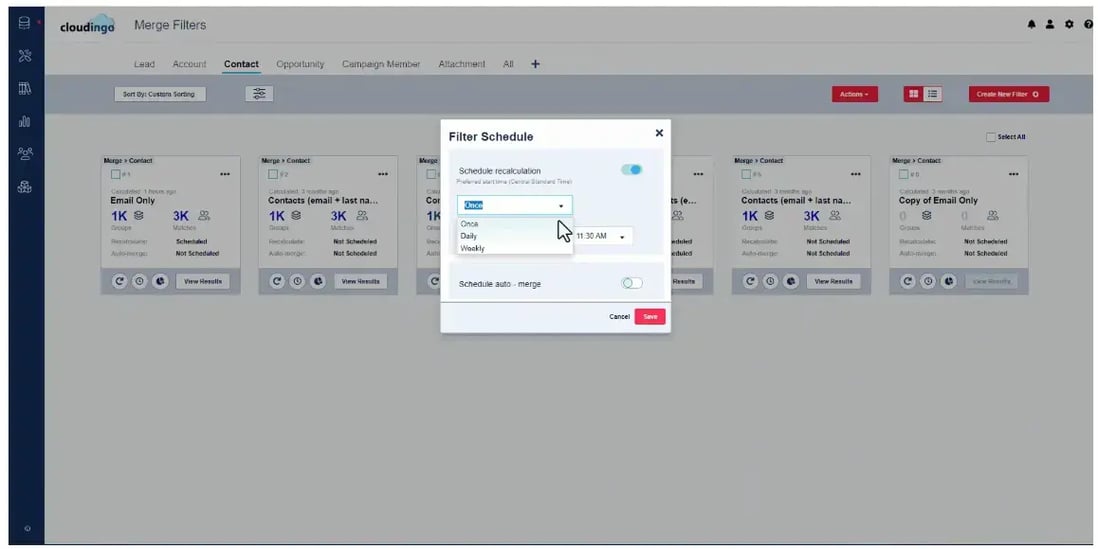
Cloudingo is built specifically for Salesforce data management. It helps users find, merge and prevent duplicate records, with no-code tools for Salesforce administrators. Cloudingo positions itself around Salesforce deduplication, data cleansing and data quality management.
For revenue operations teams managing large Salesforce instances, duplicate records are more than an inconvenience. They distort reporting, damage routing logic, and weaken account ownership. Cloudingo helps address this by giving admins control over merge rules, filters and cleansing workflows.
It is particularly useful for teams that need practical CRM hygiene improvements without relying heavily on developers.
Key strengths:
- Salesforce deduplication
- Duplicate prevention
- No-code admin controls
- Practical CRM cleansing workflows
8. Clay
Best for RevOps teams building flexible enrichment workflows across multiple data sources.
/Competitors%20and%20other%20tools/Still%20to%20approve/Clay/clay-clayent-graphic.webp?width=793&height=550&name=clay-clayent-graphic.webp)
Clay has become popular among revenue operations teams that want to combine multiple enrichment sources, AI workflows, and GTM actions in a single environment. Clay describes itself as bringing together AI agents, enrichment and intent data to support go-to-market workflows.
Its strength is flexibility. Teams can build custom enrichment logic, combine multiple data providers and create dynamic lists based on specific triggers or criteria. This makes Clay useful data cleansing and quality software for technically confident teams with the appetite to design and maintain their own enrichment workflows.
The trade-off is operational complexity. Clay can be powerful, but it requires thoughtful setup, governance and quality control. Without that, teams risk building workflows that are technically impressive but difficult to trust at scale.
Key strengths:
- Flexible enrichment workflows
- Multiple data source orchestration
- AI-supported GTM actions
- Strong for technically capable RevOps teams
9. EnrichHQ
Best for continuous CRM enrichment and email validation.
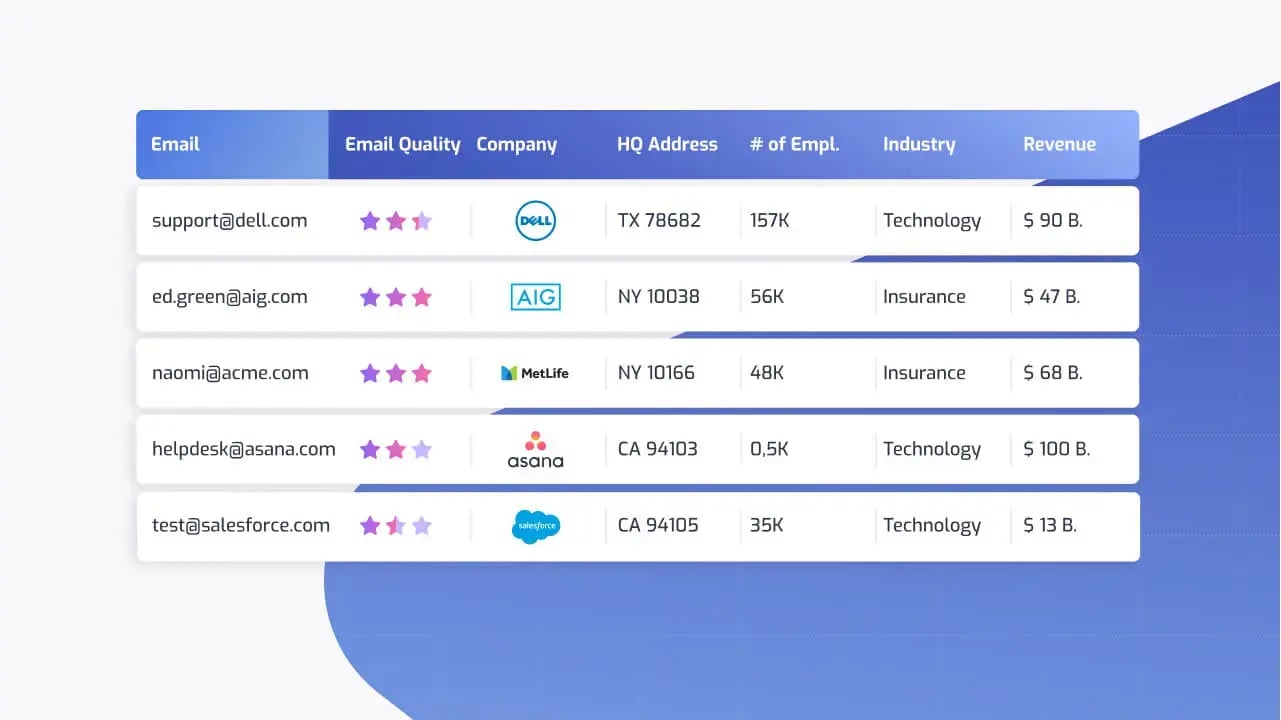
EnrichHQ by Marcom Robot is a data governance & quality software that supports CRM and marketing automation enrichment, focusing on improving customer and prospect records within existing platforms. Its HubSpot marketplace listing describes continuous data enrichment and email validation for HubSpot CRM.
For teams with incomplete CRM records, EnrichHQ can help fill gaps and improve data quality over time. It is particularly relevant for organisations that want enrichment embedded into marketing automation and CRM workflows.
It is less suited to organisations seeking deep B2B data coverage, verified mobile numbers, or enterprise-grade European data infrastructure. Its role is closer to continuous enrichment and validation than strategic revenue data governance.
Key strengths:
- Continuous CRM enrichment
- Email validation
- HubSpot compatibility
- Useful for improving field completeness
10. Leadfeeder
Best for identifying companies visiting your website and adding account-level intent signals.
/Competitors%20and%20other%20tools/leadfeeder-competitor-listicle-alternative-webp.webp?width=796&height=550&name=leadfeeder-competitor-listicle-alternative-webp.webp)
Next up on our list of B2B data quality software is Leadfeeder. It identifies anonymous companies visiting a website and can send those accounts into CRM workflows.
Leadfeeder does not solve contact-level CRM accuracy in the same way as enrichment, customer data deduplication, or verification tools. Its value is different. It adds account-level intent and engagement context, helping teams see which companies are showing interest before they convert through a form.
For European GTM teams, that kind of first-party intent signal can be useful when layered on top of accurate account and contact data.
Key strengths:
- Website visitor identification
- Account-level intent signals
- CRM integrations
- Useful for prioritisation and account follow-up
11. Apollo.io
Best for teams that want contact data, enrichment and engagement features in one platform.
/Competitors%20and%20other%20tools/Apollo-alternative-competitor.webp?width=550&height=550&name=Apollo-alternative-competitor.webp)
Apollo.io is a data quality tool that combines a B2B contact database with CRM enrichment and sales engagement functionality. Its enrichment product is designed to keep CRM and marketing automation data accurate and up to date, with Apollo citing a database of more than 230 million contacts.
Apollo can be appealing to teams that want broad functionality in a single system. It supports contact discovery, enrichment, and outbound workflows, reducing the need for multiple tools.
For larger organisations, the key question is whether Apollo’s data quality, governance and compliance posture match the requirements of the markets they operate in. Teams expanding across Europe should carefully evaluate coverage and compliance rather than assuming that database size equals usable data quality.
You can read more about this in this list of technographic data providers.
Key strengths:
- Large contact database
- CRM enrichment
- Sales engagement functionality
- Useful for teams consolidating tools
/CTAs%20(SEO)/us-to-uk-provider-cta-webp.webp?width=2625&height=928&name=us-to-uk-provider-cta-webp.webp)
12. ZoomInfo
Best for large-scale B2B enrichment and CRM data refresh.
/Competitors%20and%20other%20tools/Still%20to%20approve/ZoomInfo/zoominfo-enrich-workflows.webp?width=606&height=450&name=zoominfo-enrich-workflows.webp)
ZoomInfo is one of the best-known B2B data platforms for quality data, with enrichment capabilities designed to keep CRM and marketing automation data clean, complete and up to date. Its documentation describes ZoomInfo Enrich as appending and updating records using ZoomInfo data, with custom parameters to maintain consistency across systems.
ZoomInfo’s strength is scale. Many large organisations use it because of its dataset breadth, integrations and coverage across GTM workflows.
For teams operating heavily in Europe, however, breadth should not be the only evaluation criterion.
European revenue execution requires strong compliance controls, local market coverage and confidence in contact-level accuracy. Organisations should assess whether ZoomInfo’s data model aligns with those requirements before treating it as their primary data layer.
See how Cognism, a European data provider, compares to ZoomInfo.
Key strengths:
- Large B2B dataset
- CRM and marketing automation enrichment
- Broad B2B integration ecosystem
- Enterprise adoption

Co-Founder and CEO @zick learn

13. Openprise
Best for RevOps data automation, cleansing, deduplication and routing.
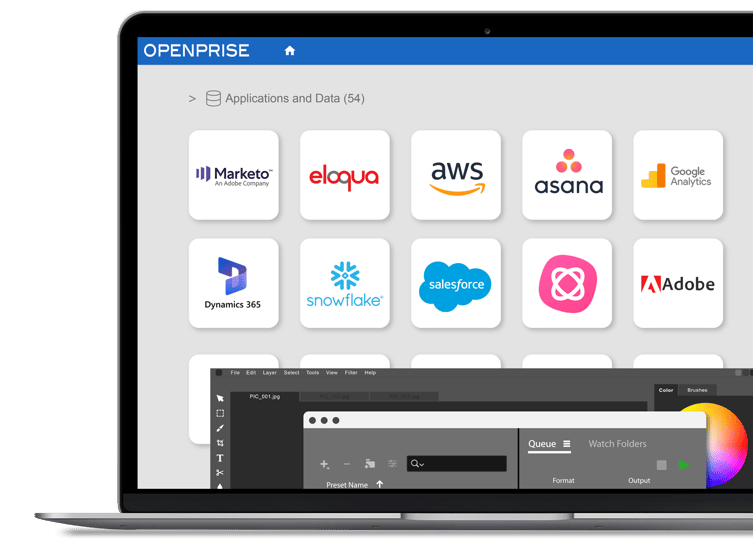
Openprise is a RevOps data automation platform designed to improve data quality, automate workflows and support revenue operations. Its data quality solution includes cleansing, deduplication and enrichment from a single platform.
For enterprise revenue teams, Openprise is valuable when data quality issues span multiple GTM systems. It can help automate standardisation, deduplication, lead-to-account matching, routing and enrichment logic.
This makes it a strong operational layer for teams with complex RevOps processes. It does not replace the need for accurate source data, but it can help govern how data moves through the revenue engine.
Key strengths:
- RevOps data automation
- Cleansing and standardisation
- Deduplication
- Routing and lead-to-account matching
- Useful for complex GTM operations
Benefits of data quality software
Poor CRM data creates more costs than you know.
A stale job title, duplicate account, invalid phone number or missing company size field may appear minor in isolation. Across a revenue organisation, each error weakens the systems that depend on CRM accuracy.
This is why data quality software has become a core part of revenue infrastructure. The right platform helps teams identify, correct, enrich, deduplicate and govern the records that shape commercial decisions.
1. More reliable forecasting
When account records are incomplete, contacts are outdated, or opportunities are assigned to the wrong segments, revenue leaders lose confidence in pipeline reporting. Data quality tools help keep CRM records accurate and current, giving teams a clearer view of market coverage, pipeline health and revenue risk.
2. Stronger segmentation and prioritisation
With cleaner firmographic, technographic, and contact data, sales and marketing teams can identify the right accounts, build more precise segments, and focus resources where they’re most likely to deliver commercial returns.
This matters particularly for organisations expanding across Europe and the UK, where market structure, regulation and data availability vary by country. Better data gives teams the operational depth to execute consistently across fragmented markets.
3. Cleaner CRM operations
Duplicate accounts, missing fields and inconsistent formatting create friction across the revenue engine.
B2B data quality software reduces that drag by standardising records, removing duplicates and improving field completion. This helps RevOps teams maintain data hygiene with cleaner workflows for routing, scoring, reporting and territory management.
4. Better AI and automation performance
AI-assisted selling, automated enrichment, lead routing and real-time personalisation all depend on the quality of CRM inputs.
If the underlying data is stale or incomplete, automation scales the problem. B2B data quality services help prevent inaccurate records from feeding the models and workflows that influence revenue decisions.
5. Lower compliance risk
If you’re operating across Europe and the UK, compliance is a commercial requirement.
Reliable data quality management software helps organisations manage records more responsibly by improving accuracy, supporting consent and suppression workflows and reducing reliance on unverified data sources.
Salesforce research found that 84% of technical leaders say their data strategies need a major overhaul for AI strategies to succeed. That makes data quality software a strategic requirement for teams building AI into routing, scoring, forecasting and revenue execution.
6. Greater confidence across revenue teams
When sales, marketing and operations teams question the CRM, alignment suffers, and teams spend more time reconciling data than acting on it.
Data quality monitoring software helps restore confidence by giving teams a shared, trusted data foundation. That confidence improves planning, execution and decision-making across the revenue organisation.
IBM found that while 97% of Salesforce customers collect diverse types of data, only 24% are using it to transform customer experiences. That gap shows why CRM data quality matters: revenue teams cannot activate data they cannot trust, standardise or connect.
Why Cognism is the strategic data layer for European revenue teams
European growth is often underestimated:
-
Markets are fragmented.
-
Regulations are stricter.
-
Contact data is harder to source responsibly.
-
Language, territory, company structure and buying behaviour vary across borders.
-
A CRM strategy that works in North America cannot simply be copied into Europe and expected to produce the same results.
Precisely found that 67% of organisations don’t completely trust the data they use for decisions, while 62% cite lack of data governance as a primary challenge inhibiting AI initiatives.
That is why Cognism’s value as data quality software extends beyond enrichment. It provides the trusted data foundation revenue teams need to operate with confidence across the UK and Europe.
Cognism’s accurate, compliant and continuously refreshed B2B data supports:
- Better market planning
- Cleaner CRM records
- Stronger segmentation
- More reliable routing
- Improved forecasting confidence
- More effective AI workflows
- Lower compliance exposure
- More consistent execution across markets
For enterprise teams, this is the difference between a CRM that records activity and a CRM that supports revenue decisions.
Book a demo today to learn more about how Cognism can support your infrastructure for predictable growth.
/CTAs%20(SEO)/Verified-contact-data-cta-webp.webp?width=2625&height=928&name=Verified-contact-data-cta-webp.webp)