In the world of pixels and screens, B2B data is the main ingredient for making better sales and marketing decisions.
But often, the data gathered is incomplete or fragmented, missing critical insights.
To combat this, companies invest in data enrichment to ensure their CRMs contain accurate and complete B2B data.
Some opt for waterfall enrichment - a process that uses multiple data sources to verify and improve prospect data.
But is this the best way to go?
Here, we’ll discuss how waterfall data enrichment works, its benefits and challenges, and how Cognism’s approach to lead enrichment sets it apart from other tools in the market.
What is waterfall enrichment?
Waterfall enrichment is a method that integrates multiple data sources to refine and validate prospect information, resulting in more detailed and accurate B2B datasets.
This approach is essential in customer relationship management (CRM), marketing, and sales.
Why?
Because accurate and complete data is essential for targeted outreach and informed decision-making.
How does waterfall data enrichment work?
Waterfall lead enrichment is a step-by-step method that improves raw data by integrating insights from various third-party sources.
A primary data provider is used first in a typical waterfall enrichment setup. If this primary source doesn’t fill in all the data gaps, the system moves to a secondary provider, and so on.
This process continues until the data is complete or all designated sources have been queried.
The “waterfall” analogy is apt, as the process flows downward, layer by layer, until the data reaches a higher level of completeness and reliability. In this context, ‘waterfall’ refers to the sequential flow of data from one source to another, similar to how water cascades down a series of steps.
Here’s an infographic showcasing the process of waterfall data enrichment:
/Waterfall%20data%20enrichment/COG021_Waterfall%20(1).webp?width=750&height=796&name=COG021_Waterfall%20(1).webp)
For instance, if a company is enriching its lead data, it might start with a provider that excels in contact information. If the provider lacks industry or company information, it moves to the next provider specialising in this area.
This step-by-step approach is said to ensure a higher match rate.
Pros and cons of using a waterfall enrichment method
Waterfall data enrichment offers four main benefits: reduced data decay, minimised spending across multiple vendors, and greater data completeness.
However, there are also several challenges to using a waterfall enrichment method.
Let’s take a deeper look.
1. Complex implementation
Setting up a waterfall enrichment process can be complex.
It involves selecting, integrating, and configuring multiple data providers, each with unique data formats, refresh rates, and strengths.
Companies must design workflows that account for these differences, ensuring each provider’s data can be effectively incorporated.
Without careful planning, the complexity of managing multiple integrations can become overwhelming, hindering the enrichment process’s efficiency.
You can use waterfall enrichment tools like Clay, which scrapes several data vendor databases; however, this can lead to compliance concerns.
Some data providers aren’t CCPA and GDPR-compliant, so using partner data can create confusion about where the data comes from and whether it’s following B2B compliance rules.
2. Data privacy and compliance concerns
As B2B data flows through multiple third-party sources, ensuring compliance with data privacy regulations becomes increasingly challenging.
Each provider has its data collection practices, which may or may not align perfectly with industry standards.
Companies are responsible for verifying that each provider adheres to all relevant regulations, which can be complex and time-consuming.
Any compliance lapse could expose the organisation to regulatory penalties, making compliance management a critical aspect of waterfall enrichment.
Why is compliance so important to consider for waterfall enrichment?
When you contact prospects for sales or marketing purposes, you’re still contacting individuals, even if you’re contacting a business. All individuals have data-related rights that must be protected.
Some have opted out of marketing or haven’t even consented to having their data used for these purposes. Others may have signed up for a do-not-call list. If you contact a customer who has opted out of marketing, hasn’t been notified of their data being used, or is on a DNC list, you may be in for a big fine.
Instead, to avoid a compliance nightmare, choose a data provider with strict compliance policies, like Cognism.


3. Inconsistencies with data quality
Like diligence to compliance, not all data providers have the same standards for data quality.
Inconsistencies may arise when combining information from various sources with variations in data formats, accuracy levels, and update frequencies.
For instance, say you’re using Cognism, and you choose to use another tool that doesn’t offer verified data alongside it.
Cognism will enrich your database with verified data, while the other tool might replace that data with the wrong number, but the correct name.
This could be because they’ve taken data from a customer who uses a provider that supplements its database using their CRM data. All the details in the CRM are correct, but the number goes to someone with the same name at a different company.
Your sales team will be horrified, which can lead to a lack of sales motivation when it happens over and over again.
To mitigate this, organisations often need additional data cleansing or normalisation tools, which add more layers to the process, incur extra expense, and increase operational complexity.
4. The added costs
Speaking of additional costs, while waterfall enrichment can be cost-effective, leveraging multiple data providers can still involve significant expenses, especially when working with premium providers that offer highly specific data.
Companies must balance cost and value, strategically selecting providers delivering the highest ROI for their needs.
Mismanagement here can lead to high costs with minimal value added.
Want to avoid all of these waterfall enrichment risks?
Why not go with a provider that frequently verifies and updates its dataset, focusing on providing the best quality data over a massive database of incorrect numbers?
Choose Cognism, as Redgate did.

How does Cognism’s data enrichment differ from waterfall enrichment tools?
Waterfall enrichment tools usually work by passing records through several data providers until a match is found. This can improve coverage, but it can also create inconsistency.
Different lead enrichment providers may return conflicting fields, incomplete records, duplicate data or contact information that doesn’t meet the compliance standards required for European GTM execution.
Cognism takes a more governed approach to enrichment.
Rather than treating enrichment as a cascade of disconnected lookups, Cognism helps revenue teams understand where CRM data is incomplete, prioritise the records that matter most and enrich them with accurate, compliant B2B contact and company data.

1. Trusted B2B data built for revenue teams
Cognism uses proprietary data sources, machine learning, scoring algorithms and human verification to improve data quality across its database.
This gives teams access to accurate, compliant contact and company data, including verified business emails, phone numbers, job titles, seniority, department and company information.
For revenue teams, this matters because enrichment should improve the CRM records used for segmentation, routing, prioritisation, forecasting and AI-driven workflows. The goal is better decision-making, not simply a higher number of matched fields.
2. Frequent updates that protect CRM quality
B2B data decays quickly as people change roles, companies restructure, phone numbers go stale, and buying committees move.
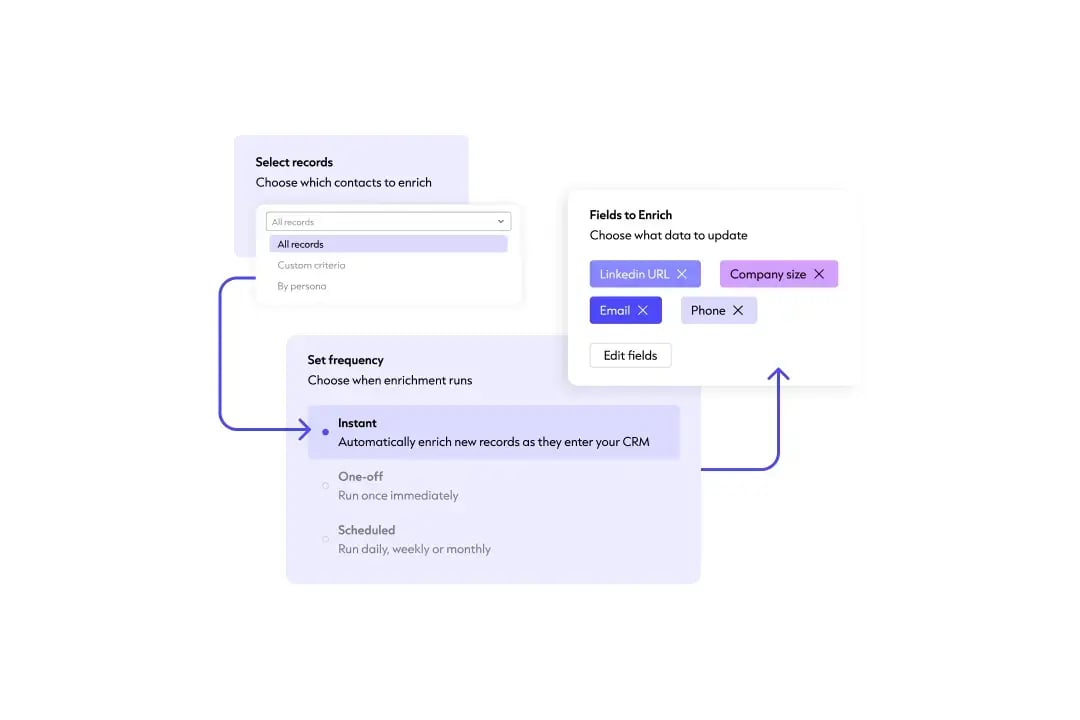
Cognism supports both scheduled and instant enrichment workflows, enabling teams to keep priority records up to date over time. Scheduled jobs can refresh specific cohorts, such as target personas, European regions or high-value CRM segments. Instant enrichment improves data quality at the point of entry by filling missing fields when a new contact is created in Salesforce.
This helps teams move away from reactive clean-up projects and towards ongoing CRM data integrity.
3. Visibility before enrichment begins
One of the main weaknesses of waterfall enrichment is that teams often enrich without a clear view of the real gaps.
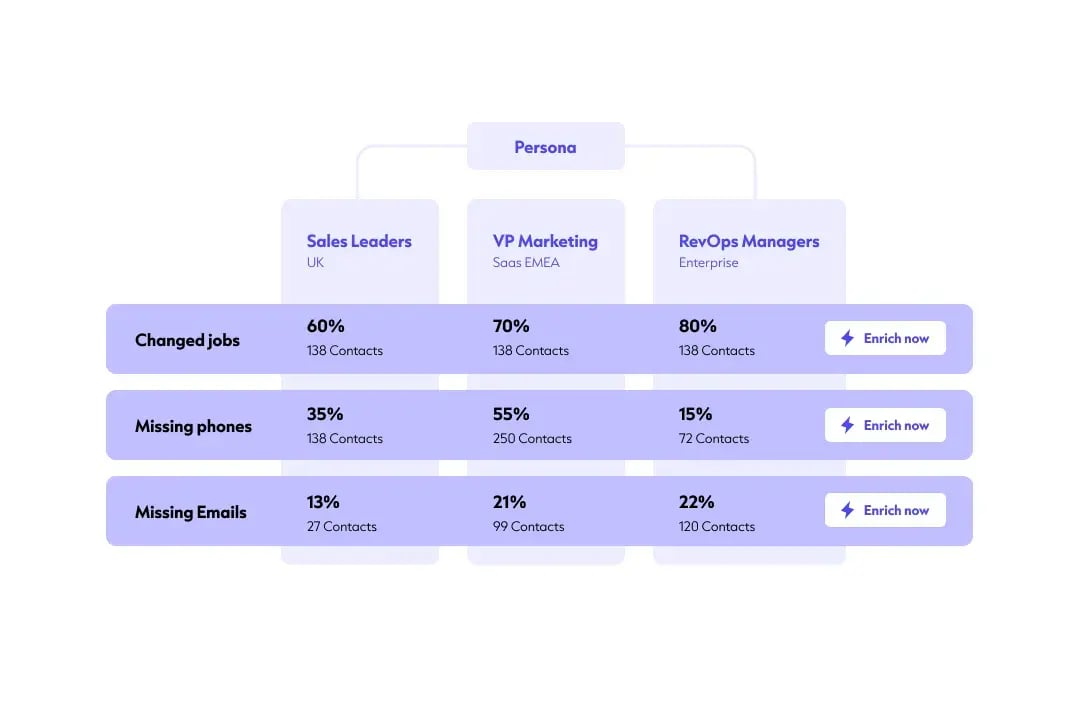
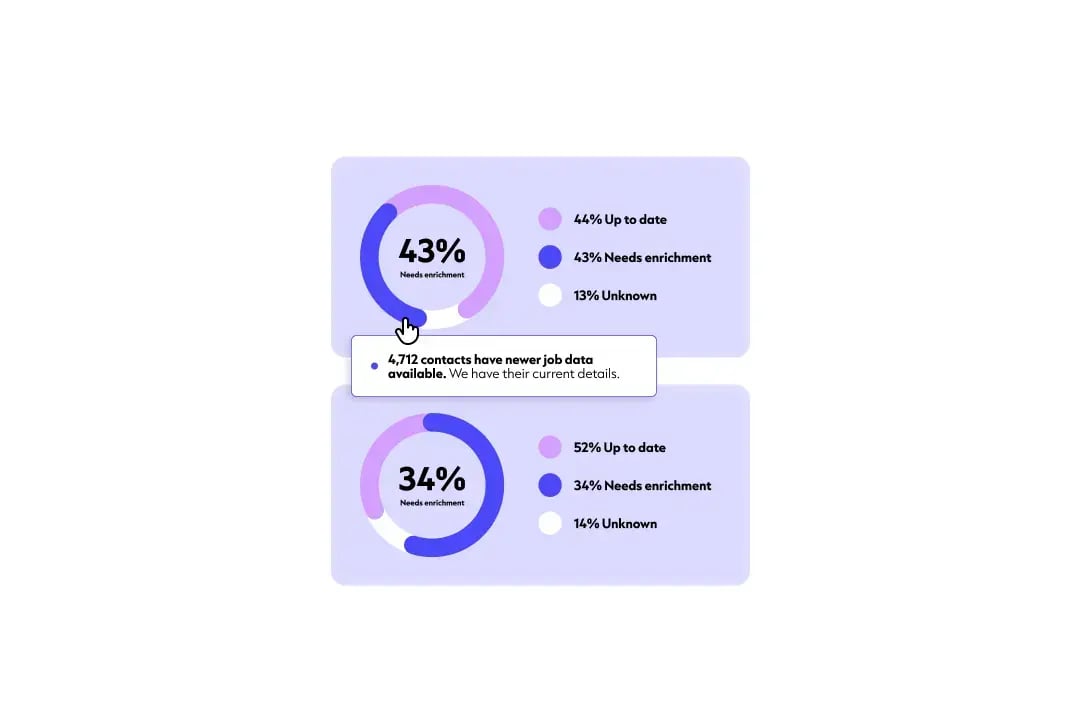
Cognism’s CRM health dashboard gives teams a live view of data completeness across contacts and leads, broken down by persona, segment and region. Before using credits, RevOps and marketing ops can see where records are missing key fields and where enrichment will have the greatest commercial impact.
That means enrichment can be prioritised around revenue workflows rather than applied broadly across low-value records.
4. Field-level control and governed updates
Waterfall lead enrichment can pose a risk when teams have limited control over which fields are updated.
Cognism gives teams field-level controls so RevOps can decide which fields are safe to update and which should be protected. Sensitive fields such as owner, lifecycle stage or custom scoring logic can be locked, while fields such as contact details, firmographics and job titles can be enriched.
This helps teams improve CRM data quality without undermining the fields their operating model depends on.
5. European data and compliance strength
Waterfall enrichment becomes more complex when teams are selling into Europe. GDPR, local outreach rules, do-not-call requirements and country-specific compliance expectations make it harder to rely on a chain of disconnected providers.
Cognism’s strength is accurate, compliant European B2B data. This is especially important for teams operating across the UK, DACH, France, Benelux and the Nordics, where data quality and compliance directly affect campaign execution, outbound activity and market expansion.
For European GTM teams, enrichment quality depends on more than whether a record can be matched. It depends on whether the data is current, usable and compliant.
6. Targeted enrichment instead of blanket refreshes
Cognism lets teams define enrichment criteria by persona, region, segment, priority tier or CRM field.
This helps teams focus enrichment on the records that matter most, such as active opportunities, target accounts, priority personas or key European markets. It also helps reduce wasted spend on low-value records that don’t influence pipeline, campaign performance or customer expansion.
7. Ongoing hygiene without manual admin
Cognism supports one-off, scheduled and always-on enrichment workflows, so teams can choose the cadence that fits their operating model.
A one-off job may suit an event list or campaign audience. A scheduled job may suit priority segments that need regular refreshes. Always-on enrichment helps keep CRM records current as new data enters the system.
This reduces the need for RevOps to act as the human data pipeline.
8. Data orchestration through Cognism DaaS
For organisations that need B2B data delivered outside the CRM, CognismData as a Service offers flexible delivery through API and flat-file options, including Snowflake, S3, Google Cloud, Databricks and SFTP.
This helps larger teams use Cognism data across revenue systems, analytics environments and AI workflows while maintaining audit-ready metadata and compliance controls.
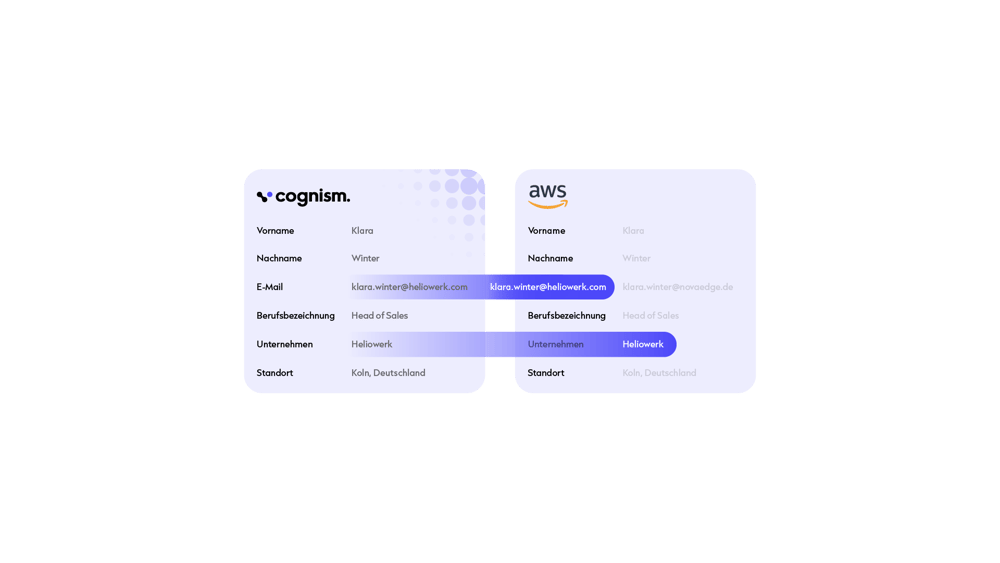
Waterfall enrichment challenges in EU expansion
Waterfall enrichment can create a particular risk for teams expanding into Europe.
As records move through several third-party vendors, it becomes harder to track data provenance, consent trails and regional compliance requirements. Formatting differences across countries, languages, job titles and company structures can also reduce match quality and create inconsistent CRM records.
For GTM teams, these issues are both commercial and operational. Poor enrichment can delay launches, weaken segmentation, reduce contactability and create compliance exposure.
Teams selling into Europe need enrichment built around local depth, compliant sourcing and accurate regional data. Global volume alone won’t give revenue teams the confidence they need to execute across European markets.
Data enrichment without the risk
Waterfall enrichment can help fill data gaps, but it often creates new complexity around data quality, consistency, governance and compliance.
Cognism gives revenue teams a more controlled approach. With CRM health visibility, governed enrichment workflows, proprietary data sources, human verification and strong European compliance practices, Cognism helps teams build a more reliable CRM data foundation.
That foundation supports better segmentation, routing, forecasting, campaign execution and AI-driven revenue workflows.
See how Cognism helps revenue teams enrich CRM data with accuracy, compliance and control.